Aaron Judge Has A Stress Fracture In His Rib And Could Be Out Until August
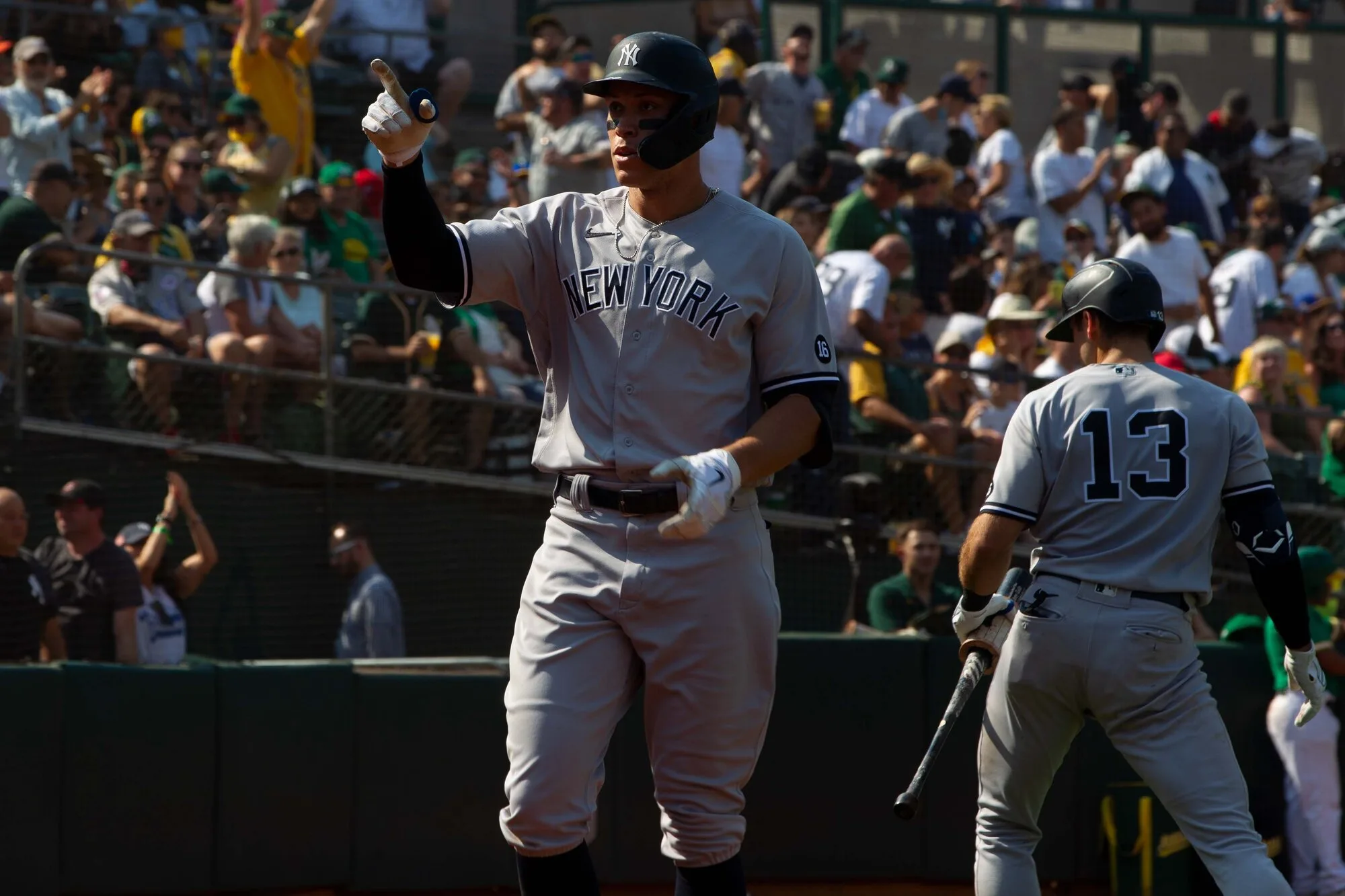
The New York Yankees announced Thursday evening that Aaron Judge, their captain, their three-time American League MVP, the best hitter in baseball, has been diagnosed with a stress fracture of the first rib on his right side and will be out indefinitely, with re-evaluation imaging scheduled in four to six weeks.
The Yankees said Judge is expected to return at some point this season. Given the minimum timeline to re-evaluation and the ramp-up period required after any rib fracture clears before a player can swing a bat competitively, the most honest projection puts his return somewhere in August, if everything heals on schedule.
It is the same injury he had in 2020. Stress fracture. First rib. Right side. Six years ago it did not cost him any games because the COVID-19 pandemic delayed the start of that season.
This time it will cost him weeks, at minimum, in the middle of what the Yankees want to be a championship run.
Manager Aaron Boone did not try to understate what the loss of his captain means. "Best hitter in the sport. And obviously what he means to us. There's a void there."
How The Diagnosis Changed
The Yankees spent several days arriving at Thursday's announcement through a process that produced two different descriptions of the same injury. When Judge stopped appearing in the lineup after Sunday, missing Tuesday, Wednesday and Thursday against the Cleveland Guardians, Boone initially described the issue as a bone bruise.
He said Wednesday that Judge had been managing pain in his right shoulder while swinging for weeks without mentioning it, the specific kind of detail that reveals both the player's tolerance for playing through discomfort and the gap between what players tell trainers in season and what is actually happening.
Further testing, additional imaging requested when the initial evaluation did not fully explain the pain profile, revealed the stress fracture. The first rib, where Judge's fracture is located, is not one of the easily identified ribs you can count from the outside.
It sits at the top of the rib cage, beneath the collarbone, where a network of muscles, tendons and nerves that control the arm and shoulder originate and pass through.
Pain while swinging a bat, the exact symptom Judge reported, is consistent with a first rib stress fracture because the motion of a baseball swing loads exactly the muscles and tendons that attach at or near the first rib.
CBS Sports reported that thoracic outlet syndrome, a condition in which structures in the space between the collarbone and first rib compress the nerves and blood vessels that supply the arm, had been among the initial concerns before the stress fracture diagnosis was confirmed.
Thoracic outlet syndrome would have been a longer-term and more complicated problem. A stress fracture, while serious, has a defined healing pathway and a clearer return-to-play timeline.
The treatment is rest and limited physical activity. No surgery. No intervention beyond letting the bone heal with the protection of restricted movement.
Judge will have imaging in four to six weeks and the results will determine when he can begin baseball activities again.
From the start of those baseball activities, light throwing, hitting off a tee, gradually building up to game speed, there is typically another several weeks before a player is ready to compete. The August projection is not pessimistic; it is the math of the minimum timeline done honestly.
What This Does To The Yankees
The specific statistical record that CBS Sports cited tells the story of what Aaron Judge means to this franchise more precisely than any description could.
Since 2020, the Yankees have a .585 winning percentage and a plus-748 run differential when Judge is in the lineup. Without him, those numbers fall to .468 winning percentage and minus-42 run differential.
The difference between those two versions of the Yankees is the difference between a team that wins 95 games and a team that wins 76.
Judge had played in all 59 of the Yankees' games through Sunday. He was batting .275 with 16 or 17 home runs and a 1.047 on-base-plus-slugging percentage, down from the historically extraordinary numbers he produced in 2024 and 2025 when he won back-to-back AL MVP awards, but still among the better offensive outputs in the American League.
He had been managing the rib discomfort for weeks while producing those numbers. The fact that he was hurting that whole time and still posting a 1.047 OPS is the measure of how good he is when healthy.
The Yankees are deep enough to absorb an absence. Ben Rice has been one of the best hitters in baseball in 2026 at first base.
Gerrit Cole just returned to a big league mound for the first time since 2024 and has been pitching well. Cam Schlitter has been outstanding. Cody Bellinger is having an excellent second season in the Bronx.
The American League is weak enough in 2026 that the Yankees can absorb a month-plus without their captain and still be in favorable position for the postseason.
What they cannot do is win a World Series without Aaron Judge. They know that. The entire baseball world knows that.
The void Boone described is real in the specific sense that every team the Yankees might face in October will be studying their lineup and making decisions based on whether Judge is in it or not.
A New York team without Judge in the postseason is a fundamentally different team than the one that has been winning with him.
The Prior History That Provides Some Context
The 2020 stress fracture, same rib, same side, offers the most relevant data point for projecting what happens next. That injury originated from a September 2019 diving catch and was discovered in spring training of 2020.
The pandemic meant Judge never had to face the competitive timeline that the fracture would otherwise have created, but the healing process itself was real, two weeks of initial rest, then re-evaluation, then gradual return to activity.
The 2020 season, when it eventually started, was abbreviated to 60 games and Judge appeared in 28 of them, limited by the right calf strain that compounded the rib recovery.
The 2026 situation is the second time in his career that the same structural vulnerability in the same location has manifested.
Whether that represents a specific physical susceptibility that the Yankees medical staff will need to manage carefully going forward, or simply the statistical reality that stress fractures occasionally recur in the same bone, is a question that the imaging in four to six weeks will begin to answer.
Judge's reaction, when he first had this injury in 2020, was characteristic: "At least we have an answer, so now we can start working on a solution. But overall, I'm just mad. I want to be out there with my team."
He is 34 years old now instead of 28. The Yankees are in a pennant race instead of a pandemic-shortened exhibition. He is still the best hitter in the sport. And he is going to have to wait six weeks before anyone knows if and when he can swing a bat again.