Rob Gronkowski Admits He Never Spent His NFL Salary And Here Is How He Did It
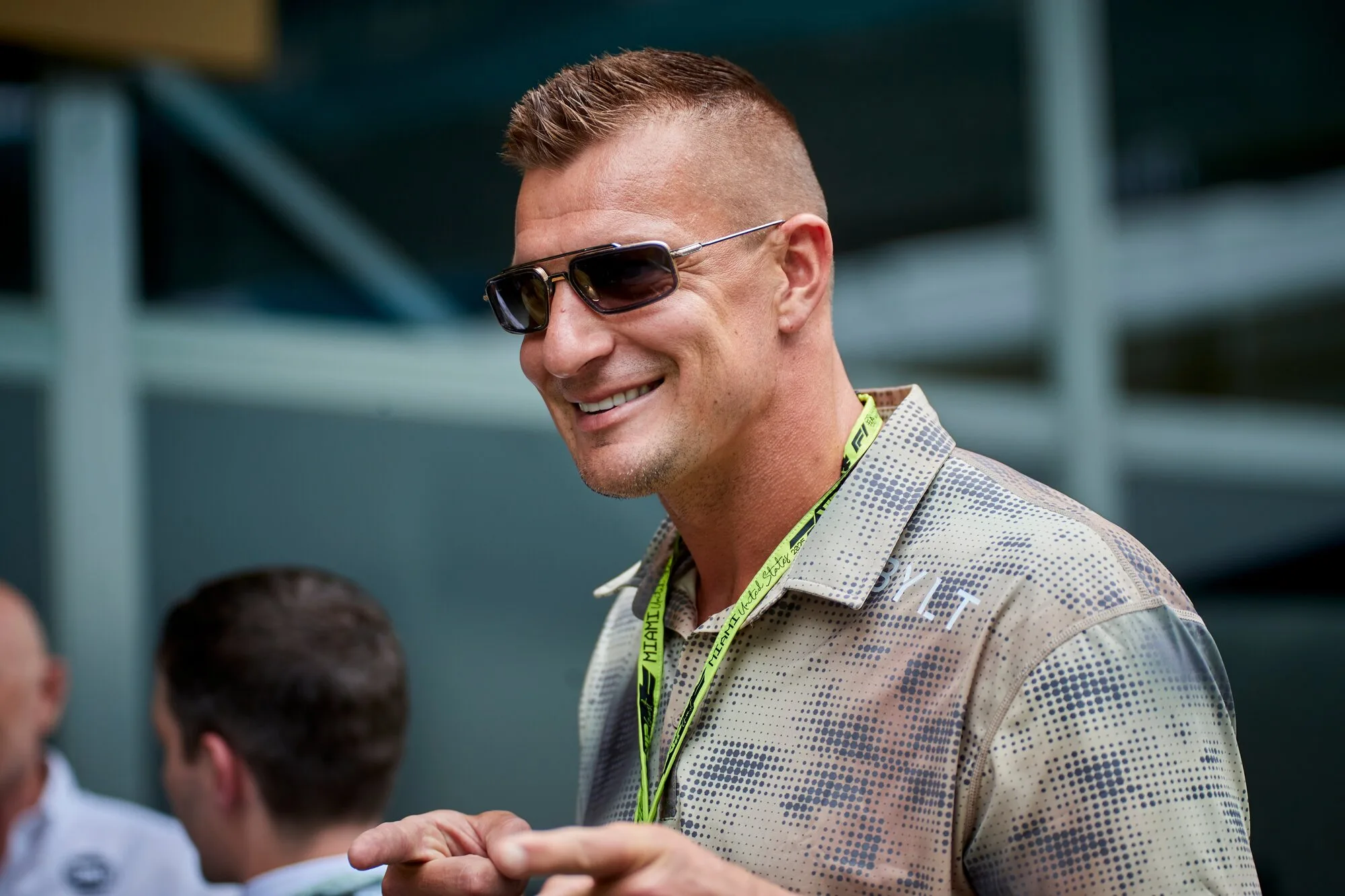
Rob Gronkowski has spent most of his post-playing life being known as the man who invented NFL fun, the tight end who danced on every stage, attended every party, appeared in every commercial and lived the exact life that every person who has ever watched a Super Bowl parade imagined a championship-winning professional athlete lives.
The reputation is not wrong exactly, but a Forbes interview circulating this week reveals the financial reality of Gronkowski's first years in the NFL, and it is the opposite of what anyone would expect.
He was 22 years old in 2010 when the Patriots drafted him in the second round. He had a four-year, $4 million contract.
His agent gave him a $50,000 advance. He used that advance to buy a 2008 Cadillac Escalade and pay his first month of rent in New England. And then, as he told Forbes recently in an interview that NESN covered Thursday, he essentially stopped spending his NFL money entirely.
"And then from there on out, I really didn't need any other money," Gronkowski said.
The rest took care of itself through the specific economics of being a Patriot. The team provided free meals at the facility. When he went out in the Boston area, the drinks were free or nearly so.
"You go out, the drinks are free or you pay for one, you get 10 free when you're on the Patriots up in the Boston area," he said. He had a roommate, a teammate, in a condo where they split $1,500 a month in rent. He lived off his marketing and endorsement income and deposited his NFL paychecks without touching them.
"I just lived off my marketing dollars. I was living a low-level life. I had a condo with a roommate that was on the team as well. We're paying $1,500 a month in rent while in the NFL. I was very frugal and that's how I got away with it."
Why He Made The Decision At 22
The logic Gronkowski applied as a rookie was the logic of someone who understood his situation clearly despite being known primarily for having an enormous amount of fun. He was a second-round pick.
Second-round picks get good contracts by civilian standards and modest contracts by NFL standards. His four-year, $4 million rookie deal was not going to make him independently wealthy if the career went wrong.
If he got injured in year one and was cut in year two, he would have had two years of NFL income and nothing on the other side.
"I didn't know how long the NFL was gonna last," he said. "I was a second-round pick, so it was like a four-year, $4 million deal, and I was like, if I can play this contract out, I'll be set for life."
The phrase "NFL stands for not for long" has been used by players and coaches to describe the precarious nature of professional football careers for as long as the league has existed.
The average NFL career lasts approximately three and a half years. The median player never receives a second contract. The players who play for 11 seasons, as Gronkowski did, are the extreme outliers, and none of them knew they would be outliers when they walked into their first training camp.
Gronkowski walked into his first training camp with a 2008 Escalade, a $1,500-a-month condo split with a teammate and the specific financial philosophy that anyone who has thought seriously about the NFL career statistics would arrive at, treat the salary as untouchable capital and live off everything else.
What Happens When The Marketing Money Flows
The endorsement and marketing income that funded Gronkowski's living expenses in his early years was not separate from his on-field performance, it was generated by it.
His 10 touchdown catches as a rookie in 2010 were followed by 17 touchdown catches in 2011, the single-season record for tight ends at the time.
His combination of size, athleticism and personality made him one of the most marketable players in football within two years of being drafted.
BODYARMOR was among his most significant early partnerships, he was one of the early investor-athletes in the sports drink company that Coca-Cola eventually acquired in 2021 for $5.6 billion, a transaction that made Gronkowski's equity stake worth tens of millions of dollars independent of his football salary.
The endorsement and investment income that he lived off as a rookie eventually scaled into the kind of financial foundation that made the decision to save his NFL salary look prescient rather than merely cautious.
By the time he retired after the 2021 season with the Tampa Bay Buccaneers following his fourth Super Bowl ring, Gronkowski had accumulated the career records for tight end receiving yards, receiving touchdowns and receptions.
He had also, by his own account, never spent a dollar of his NFL salary, investing or saving every check while living off the parallel income stream that his brand generated.
The Blueprint That Current Rookies Are Following
The NESN article that brought Gronkowski's Forbes interview to a wider audience on Thursday drew the direct line between his rookie financial philosophy and what current NFL rookies are saying publicly in 2026.
The timing is relevant because the 2026 NFL Draft class is entering the league simultaneously with Gronkowski's story circulating.
Cardinals rookie Jeremiyah Love, the third overall pick in the 2026 draft, publicly stated before his first professional paycheck that he will not spend his NFL salary. "I'm not spending any of my NFL checks," Love told BRGridiron, explaining that he will live off endorsement income while his financial advisor handles his salary.
Multiple media outlets immediately connected Love's statement to Gronkowski's blueprint as the canonical example of an NFL player who executed exactly that strategy across a full career.
Drake Maye, the Patriots quarterback entering his second NFL season on a reported $36.6 million rookie deal, still drives a 2015 GMC pickup truck.
The financial philosophy that Gronkowski articulated, treat the salary as capital to be preserved, not income to be spent, is visible in how the current generation of thoughtful NFL players is approaching their earnings.
The Legacy Beyond The Football
Gronkowski retired as the greatest tight end in NFL history. His 621 career receptions, 9,286 receiving yards and 92 touchdowns are the records that define the position for whatever comes after him.
His four Super Bowl rings place him alongside the small group of players who have won championships across multiple decades and multiple franchises. He was inducted into the Patriots Hall of Fame and awaits formal Pro Football Hall of Fame consideration.
The party image is real, Gronkowski has never pretended to be someone who skipped postgame celebrations or spent his weekends quietly at home.
The foam parties, the shirtless appearances, the inability to pass a camera without dancing for it, that is also genuinely who he is. The Forbes interview does not contradict any of that.
It simply adds the context that the party was entirely funded by sponsors, endorsers and marketing partners while the NFL paychecks sat in accounts that Gronkowski, by his account, barely touched.
He is now a Fox NFL Sunday analyst. He still drives a personality the size of a stadium. He apparently bought his first car with a $50,000 advance that he paid back over time, had a roommate while making NFL money and described all of it as the obvious decision for a 22-year-old who understood that careers end and money does not replace itself.
The party guy saved every dollar he made. The party was free.