
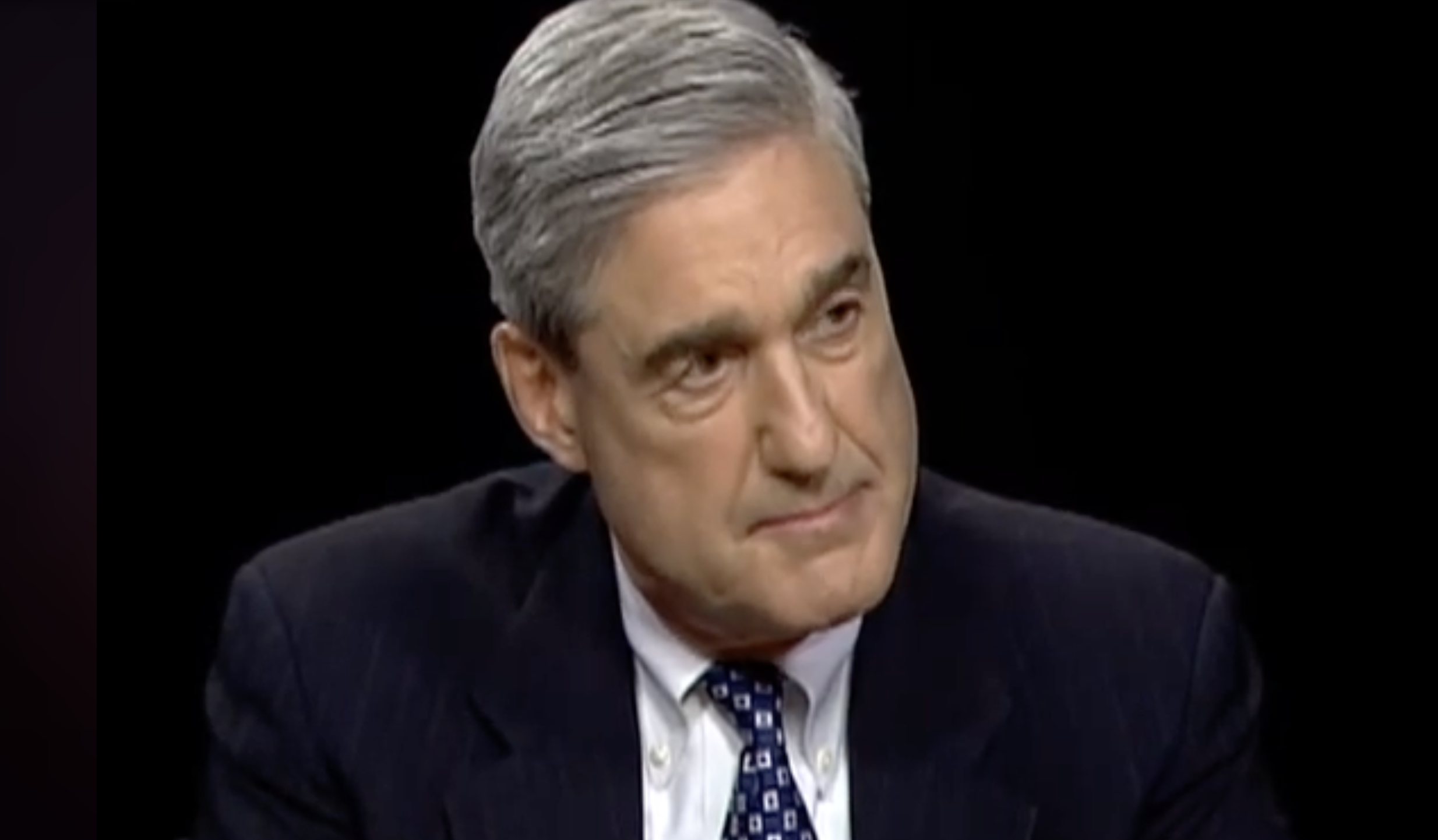
Robert Mueller, the former FBI director and special counsel whose 22-month investigation into Russian interference in the 2016 presidential election became one of the most consequential legal proceedings in modern American history, died on Friday.
He was 81 years old.
The news was first reported by MS NOW on Saturday morning, citing two people familiar with the matter.
The cause of death was not immediately confirmed, though Mueller had been suffering from Parkinson’s disease for several years.
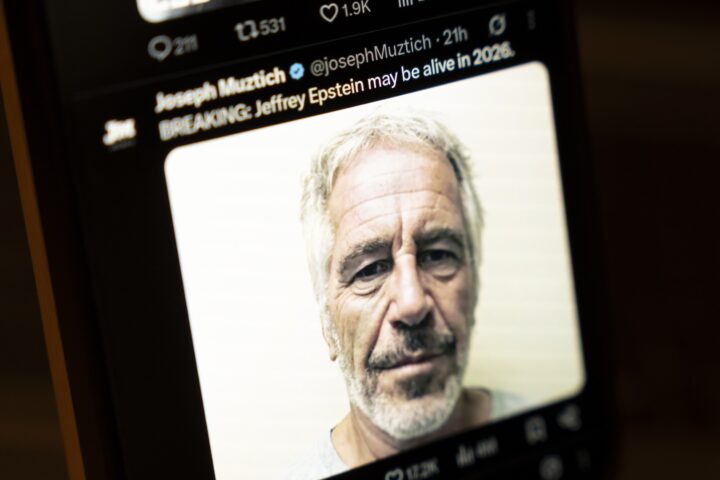
His family had disclosed the diagnosis publicly in August 2025, after the House Oversight Committee issued a subpoena seeking his testimony as part of its investigation into the federal government’s handling of the Jeffrey Epstein prosecutions.
The committee withdrew the subpoena after learning of his condition. “Bob was diagnosed with Parkinson’s disease in the summer of 2021,” his family said at the time.
“He retired from the practice of law at the end of that year. He taught at his law school alma mater during the fall of both 2021 and 2022, and he retired at the end of 2022. His family asks that his privacy be respected.”
He had been out of public life for three years when he died.
Who Was Robert Mueller Before Trump?
Robert Swan Mueller III was born on August 7, 1944, in Manhattan and raised in Philadelphia.
He attended Princeton University, graduating in 1966, and served as a Marine Corps officer during the Vietnam War, volunteering for combat duty after completing officer training and earning a Bronze Star for heroism, a Purple Heart, and the Vietnamese Cross of Gallantry.
He came back and went to law school at the University of Virginia, graduating in 1973. He later earned a master’s degree from New York University.
He was a registered Republican his entire professional life. He was appointed and confirmed to Senate-verified positions by four presidents, George H.W. Bush, Bill Clinton, George W. Bush, and Barack Obama, a span of bipartisan trust that is essentially without precedent in modern federal law enforcement.
He spent the 1970s and 1980s working as a federal prosecutor in California and Massachusetts, building a reputation as methodical, serious, and constitutionally scrupulous.
In the early 1990s, as assistant attorney general for the Criminal Division, he led the prosecution of those responsible for the December 1988 bombing of Pan Am Flight 103, which killed 270 people over Lockerbie, Scotland.
The work required coordinating evidence across multiple countries and resulted in one of the most complex terrorism prosecutions the Department of Justice had ever undertaken.
Mueller’s Time At The FBI
Mueller was confirmed as the sixth director of the Federal Bureau of Investigation on August 2, 2001, in a unanimous Senate vote of 98 to 0. He was sworn in on September 4, 2001.
One week later, the September 11 attacks killed nearly 3,000 people and collapsed the twin towers of the World Trade Center.
He spent the following twelve years transforming the FBI from a domestic law enforcement agency into a counterterrorism organization with global reach.
He sent agents to more than 30 countries in the immediate aftermath of the attacks, shifted the bureau’s institutional priorities from crime to intelligence, and oversaw the development of the infrastructure that has defined federal counterterrorism work in the decades since.
He barred FBI personnel from participating in the CIA’s enhanced interrogation program. When the White House pushed back, he held firm.
In 2011, President Obama asked him to serve two additional years beyond the standard ten-year limit. The Senate confirmed the extension 100 to 0. He left office in September 2013, succeeded by James Comey.
Mueller’s Investigation Into President Donald Trump
In May 2017, President Trump fired FBI Director James Comey.
The following week, the Justice Department appointed Mueller as special counsel to oversee the investigation into Russian interference in the 2016 presidential election and any potential coordination between Russian officials and the Trump campaign.
Thirteen Russian nationals and three Russian organizations were indicted for a systematic campaign of social media disinformation designed to aid Trump’s 2016 candidacy.
Mueller’s final report, submitted to Attorney General William Barr in March 2019, concluded that Russia had interfered in the election with the intent of benefiting Trump’s campaign.
On the question of obstruction of justice, Mueller wrote that existing Justice Department policy prevented him from indicting a sitting president, and that he could neither accuse nor exonerate Trump on that question, leaving it, in his words, to a process other than the criminal justice system.
He testified before Congress in July 2019. By then he was 74. He spoke carefully and was sometimes halting. It was the last major public moment of his career.
What Was Robert Mueller’s Personal Life Like?
Mueller was famously private. He gave almost no interviews throughout his career. He was known among colleagues for working with relentless discipline and expecting the same from everyone around him.
He was described by people who worked with him as someone who did not seek credit and did not engage in Washington’s customary habits of self-promotion and leaking.
He and Attorney General William Barr, who oversaw the final stages of the special counsel investigation and whose four-page summary of its findings drew criticism for what many said was an incomplete characterization, had been friends since the 1980s.
Mueller attended the weddings of two of Barr’s daughters.
He married Ann Cabell Standish in 1966. They had two daughters. He was diagnosed with prostate cancer in 2000, which delayed his confirmation hearings for FBI director by several months.
He recovered fully before being sworn in.
He spent his final years away from public life. There were no memoirs, no speaking tours, no television appearances.
The man who had been the subject of more national anxiety and speculation than perhaps any law enforcement official in American history simply withdrew and asked that his privacy be respected.
It was, in its own way, entirely consistent with everything else he had ever done.