
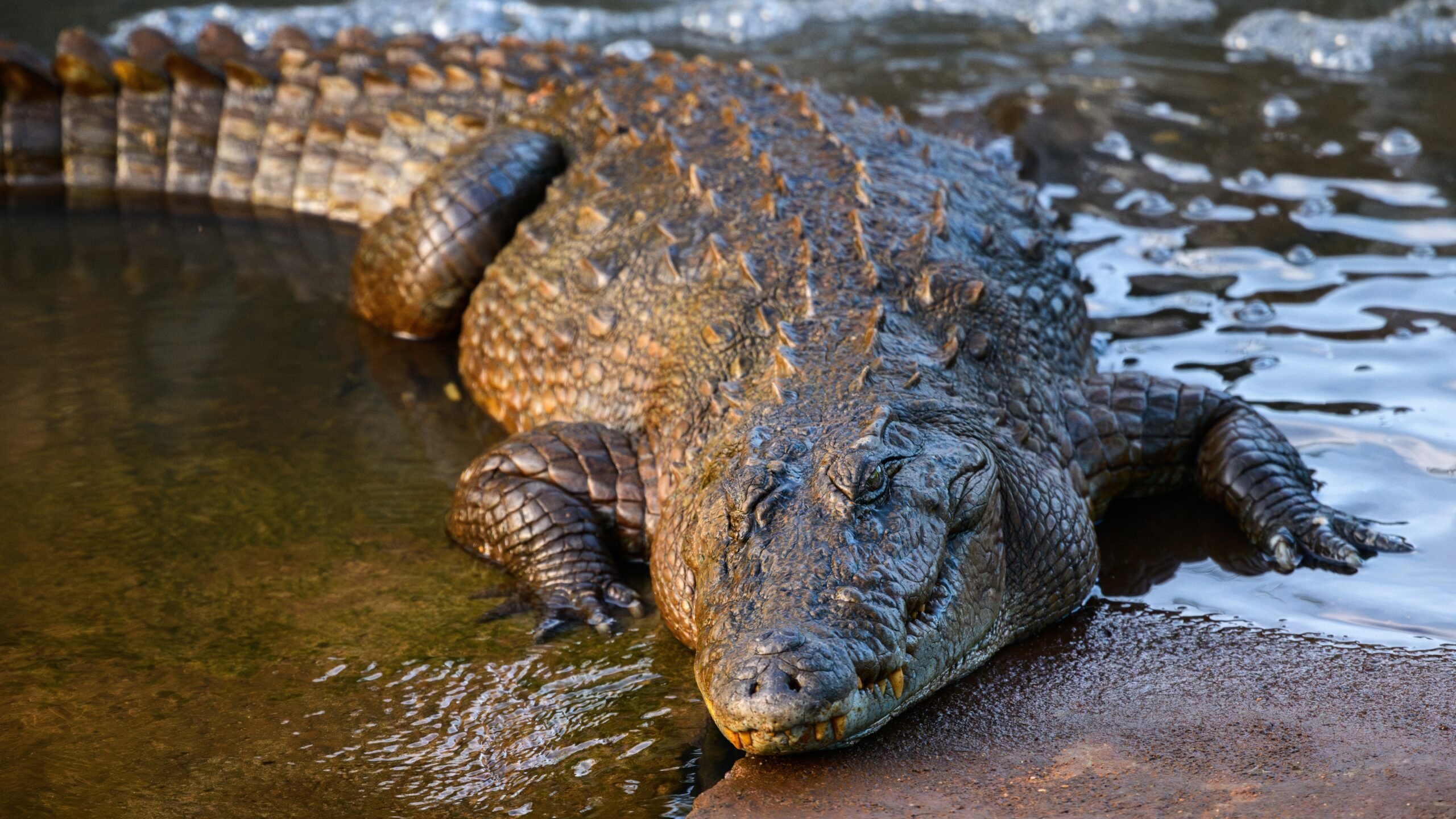
A 15-foot crocodile was airlifted by helicopter from the Komati River in South Africa after authorities determined it likely contained the remains of Gabriel Batista, a 59-year-old hotel owner who went missing last week when his vehicle became stuck during heavy rainfall and he was swept into the crocodile-infested river.
Police euthanized the animal and found two severed arms, half a rib cage, chunks of flesh and a ring believed to belong to Batista on one of the fingers.
At least six additional pairs of shoes from other individuals were also found in the reptile’s stomach.
DNA testing is underway to formally confirm the identity of the remains. The South African Police Service released video of the operation, which required a police captain to be lowered from a helicopter by rope directly onto the snout of the crocodile while two other large crocodiles watched from nearby.
The operation is being called one of the most dangerous and complex recovery missions in recent SAPS history.
How The Search Led To One Crocodile
Gabriel Batista disappeared last week during a period of heavy rainfall in the Komati River area.
His vehicle became stuck and authorities believe he was swept into the water, which is known to be heavily populated by Nile crocodiles, among the most dangerous crocodilians in the world and responsible for hundreds of human fatalities in Africa each year.
Search and rescue teams began tracking the animals in the area. The specific 15-foot crocodile that became the focus of the investigation was identified through a combination of drone surveillance and helicopter observation.
Captain Johan “Pottie” Potgieter, the officer who led the retrieval, explained to the New York Post how investigators zeroed in on the animal.
“He made no effort to move despite the noise of the drones or our chopper overhead, or any inclination to seek out food, so we were sure it was this crocodile,” Potgieter said.
The animal was lying motionless in the sun with what Potgieter described as a “massively full tummy,” a behavioral indicator that it had fed recently and substantially.
Nile crocodiles are ectothermic, they regulate their body temperature by moving between water and land, basking in the sun when they need warmth and retreating to water when they need to cool down or when they feel threatened.
A crocodile that declines to move despite the presence of drones and a helicopter overhead, and shows visible signs of a recent large meal, is exhibiting the kind of specific behavioral combination that experienced wildlife officers recognize as significant.
The animal had eaten something large enough to keep it inactive and indifferent to stimuli that would normally prompt it to retreat.
The Retrieval Operation
What the SAPS video shows, and what Potgieter described in his own words, is one of the more remarkable individual acts of duty in the recent history of South African law enforcement.
With the crocodile confirmed as the animal of interest, the operation required getting close enough to it on the water to secure a harness.
That proximity was achieved by the most direct method available: Potgieter was lowered from a SANPARKS helicopter by rope into the water near the reptile.
“There were so many things that could go wrong,” Potgieter said, “and the rope basically lowered me onto the snout of the crocodile, so I was kind of hoping it really was properly dead.”
The crocodile had been euthanized before the recovery, the decision to kill the animal was made to allow safe access to its remains rather than attempting a live capture of a 15-foot Nile crocodile in murky river water with other crocodiles in the vicinity.
Potgieter secured a harness around the animal’s body while working in those conditions.
He noted that two other nearby crocodiles were watching throughout the process, a detail that underscores the environment in which the operation was conducted.
“Then I signaled to the chopper, and it just took me straight up, leaving a lot of big crocodiles behind. Then we flew to a landing zone to open the croc up,” he said.
The SAPS released video footage of the operation and drew attention to Potgieter’s actions in its official communications. Lt. Gen. Dimpane said in a statement:
“Captain Potgieter’s willingness to place his own life at risk, going far beyond the call of duty, reflects the unwavering commitment of SAPS members to serve and protect.”
What Did Authorities Find?
When the crocodile was opened at the landing zone, investigators found two severed arms, half a rib cage and chunks of flesh inside. On one of the fingers of the severed arms, a ring was found that authorities believe belonged to Gabriel Batista.
The ring’s presence provides the most personal and immediately identifiable piece of evidence connecting the remains to the missing hotel owner.
Body parts recovered from the crocodile’s intestines are being subjected to DNA analysis to formally confirm Batista’s identity.
Until those results are returned, the identification is presumptive, the combination of the behavioral evidence that led to this specific animal, the timeline of Batista’s disappearance, and the presence of the ring all point strongly in one direction, but South African law requires the scientific confirmation that DNA testing provides.
The six additional pairs of shoes found in the crocodile’s stomach are the detail that has generated significant additional concern. None of the shoes belonged to Batista.
Police are now working to determine whether any of them can be linked to other missing persons cases in the Komati River area.
A Nile crocodile that has accumulated six pairs of human shoes in its digestive system is an animal with a documented history of multiple human contacts, some or all of which may represent attacks on people who were never reported missing, whose disappearances were attributed to other causes, or who remain listed as unsolved missing persons cases in the region.
The Komati River and its surrounding area in Mpumalanga province is a region where human-crocodile encounters occur.
Nile crocodiles are apex predators that can reach 20 feet in length and have been documented ambushing humans near river crossings, flooded roads and water collection points for centuries.
The number of human fatalities attributed to Nile crocodiles in Africa each year is estimated by herpetologists at between 200 and 300, though many experts believe the true figure is significantly higher given that attacks in rural areas often go unreported.
The Komati River
Batista’s vehicle became stuck during heavy rainfall, a circumstance that reflects a specific danger of the South African rainy season in the lowveld regions where the Komati River runs.
The river rises rapidly during heavy rain events, flooding roads and crossings that are passable in dry conditions.
Drivers who become stuck in or near flooded crossings face the dual risk of drowning and crocodile attack, both of which have claimed lives in the region.
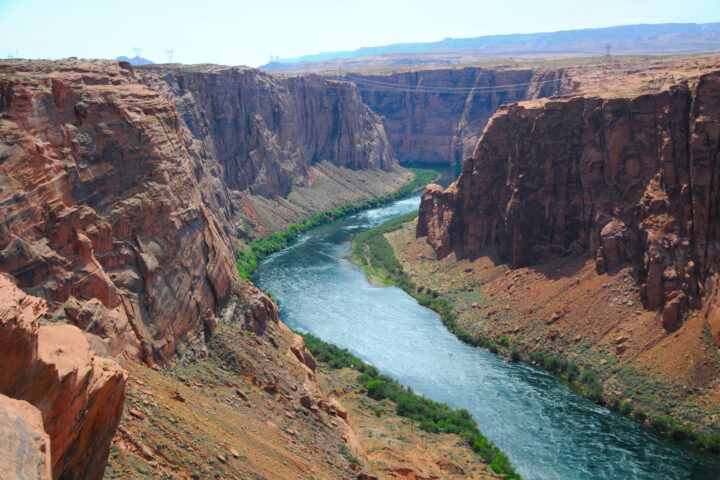
The Komati River flows through parts of Mpumalanga province and into Mozambique before reaching the Indian Ocean.
The South African sections of the river pass through terrain that includes commercial agriculture, conservation areas and rural communities, and crocodile populations in that section of the river have been documented by wildlife managers for decades.
The specific stretch where Batista went missing is not publicly named in the official SAPS materials, but the operation involved SANPARKS, South African National Parks, assets, suggesting the area is within or adjacent to a protected area.
The Broader Question The Shoes Raise
The six additional pairs of shoes recovered from the crocodile are a reminder that the Batista case, as significant as it is, represents only one encounter between this specific animal and human beings.
Police working to identify those shoes are essentially attempting to trace backwards from the physical evidence inside a single crocodile to potentially multiple separate incidents involving multiple individuals.
That investigation, matching shoes to missing persons cases, determining when each pair was consumed, reconstructing the circumstances under which their owners entered the water, is likely to be slow and may never produce complete answers.
Shoes can travel significant distances in river systems. Their owners may have disappeared in ways that were never connected to crocodile attacks.
The crocodile’s range, its movement patterns and how many individual feeding events it was involved in before being located and euthanized are all unknown.
What is known is that a 15-foot Nile crocodile was pulled from the Komati River by helicopter on the suspicion that it contained a missing man, that the suspicion was correct, and that the animal contained enough additional evidence of human encounters to open multiple new investigative questions alongside the one that prompted the search.
DNA results that confirm Batista’s identity are expected in the coming days or weeks depending on the pace of South African forensic laboratory processing.