
Everlane, the San Francisco-based direct-to-consumer brand that spent fifteen years telling customers exactly what their clothes cost to make and why that transparency mattered, is reportedly being acquired by Shein for approximately $100 million, according to Puck News, which first broke the story on May 17.
The board approved the deal on Saturday May 16. Common stockholders will receive nothing. L Catterton, the private equity firm backed by LVMH and the Arnault family that invested $85 million in Everlane in 2020 at a valuation of $550 million, is exiting through a sale that values the company at $100 million in 2026.
The buyer is Shein, the Chinese ultra-fast-fashion platform that Yale researchers have labeled the biggest polluter in the fast fashion industry and that has faced credible accusations of forced labor in its supply chain.
The brand that once published the exact material, labor, duty and transport costs of every garment it sold alongside its retail price is being absorbed by the brand that represents the opposite of everything that pitch was selling.
Fast Company described the sale as “a humiliating coda, and not just for Everlane.” That framing is accurate and understated simultaneously.
What Was Everlane?
Everlane was founded in 2010 by Michael Preysman and Jesse Farmer in San Francisco with a specific and provocative thesis about the American fashion industry.
The company’s philosophy was called radical transparency, a concept that meant publishing not just the price of a garment but the breakdown behind it. This much for the fabric, this much for labor, this much for duties, this much for transport, this is what a traditional retailer would charge you, and this is what we are charging you and why.
For a generation of consumers who had grown up watching brands sell them stories while hiding the supply chain behind the story, the approach was genuinely striking.
Everlane made it possible to look at a black cashmere sweater and see exactly how it was made, who made it, what each component cost and what the margin was.
It was not just an aesthetic proposition, the clean lines, the neutral palette, the elevated basics positioning, it was an ethical one. You could buy clothing and feel good about the decision rather than vaguely guilty.
The company practiced what it preached in ways that went beyond marketing.
In 2019, Fast Company reporter Elizabeth Segran visited Everlane’s San Francisco headquarters and found an office kitchen stocked with food in minimal packaging, a team that regularly visited factories to improve workers’ quality of life and a sustainability director who explained the specific difficulty of moving garments through a supply chain without sealing each in its own plastic bag.
Everlane had committed to eradicating virgin plastic from its supply chain by 2021. The commitment was real, even if the deadline slipped.
By 2020, with L Catterton’s $85 million investment at a $550 million valuation, Everlane looked like one of the success stories of the direct-to-consumer era, a brand that had built genuine customer loyalty around a genuine mission and that had the institutional backing to grow into something larger.
How It Fell Apart
The story of how Everlane went from a $550 million valuation to a $100 million sale absorbing $90 million in debt is partly the story of a company that made some avoidable mistakes and partly the story of market forces that no amount of mission-driven marketing could overcome.
Founder Michael Preysman had famously said he would rather shut the company down than open physical retail stores, a position that reflected the purity of the direct-to-consumer model in which Everlane’s entire proposition was built.
He then opened stores in New York in 2017 and San Francisco in 2018. The stores were beautiful and on-brand.
They were also leases, buildouts, staffing and fixed costs at a moment when the economics of physical retail were already becoming difficult for smaller brands.
The reversal on physical retail was the first sign that the company was bending to pressures that its original model had been designed to avoid.
When L Catterton took its minority stake in 2020, Preysman stepped back from day-to-day leadership.
The private equity dynamic introduced a familiar set of pressures. The need to grow at a rate consistent with the valuation paid, the push toward premium repositioning that might justify higher margins and a more ambitious exit.
The brand that had positioned itself as between fast fashion and premium contemporary, accessible basics, honest pricing, was pushed toward competing with Theory and Frankie Shop.
That repositioning required convincing an existing customer base that the brand had changed in the direction of luxury rather than the direction of the original promise. It did not fully work.
Revenue declined from an estimated $200 million around 2023 to approximately $170 million by early 2026.
The debt accumulated, a $25 million term loan from Gordon Brothers, a restructuring-specialized lender whose portfolio includes Laura Ashley and Brooks Brothers, which tells you something about where Everlane was in its corporate lifecycle, and a $65 million revolving credit facility from CIT Northbridge.
Total debt load is approximately $90 million. The total sale price isapproximately $100 million. Common stockholders receive nothing.
In March 2026, L Catterton and current CEO Alfred Chang began seeking a new investor to address the debt. They found Shein instead.
What Does Shein Get?
Shein is not acquiring Everlane because Shein wants to become a sustainable fashion brand. The strategic logic runs in the opposite direction.
Shein has been on an extended campaign to become something the Western world finds acceptable.
The company has faced accusations of forced labor in its supply chain, regulatory scrutiny in multiple markets, ongoing environmental criticism from researchers who have documented the scale of its pollution contribution, and an IPO process that has been complicated by all of the above.
Acquiring an American brand with a genuine consumer following and a history of ethical positioning gives Shein something that cannot be manufactured through its own operations. A US customer list, a domestic brand identity and a story about its portfolio that is more palatable than the one its core business tells.
Whether Everlane survives the transition with anything resembling its original brand promise is a question that cannot currently be answered.
What the deal makes unmistakably clear is that the answer does not particularly matter to the parties who approved it.
The Wider Collapse Of The Millennial Ethical Brand Wave
Everlane’s sale to Shein is not an isolated incident. It is the most recent and most symbolically pointed entry in a pattern that Fast Company writer Elizabeth Segran describes as the end of millennial optimism, the collapse of a specific category of brand that was born in the Obama era around the belief that business could be a force for good and that consumers would support that belief with their purchasing decisions.
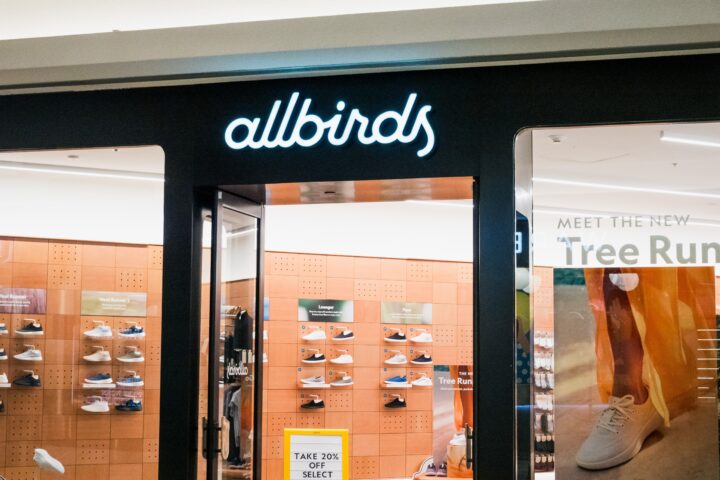
Allbirds, the New Zealand-founded, San Francisco-based sustainable sneaker company that built its brand around wool and natural materials and carbon accounting, recently sold off its footwear assets, abandoned its environmental mission and pivoted to artificial intelligence.
The pivot was received with a mixture of bafflement and resignation by the consumers who had bought Allbirds because they believed in what the company said about why materials mattered.
Beautycounter, a direct-to-consumer personal care brand founded in 2013 on the specific mission of keeping harmful ingredients out of beauty products and advocating for regulatory reform in the cosmetics industry, was acquired by the Carlyle Group and then shuttered without warning, leaving its network of sales consultants without a business overnight.
Founder Gregg Renfrew bought the brand back and has since relaunched it under the name Counter.
These brands were born during a period when millennials believed, with varying degrees of confidence, that the combination of consumer demand, technological transparency and mission-driven entrepreneurship could change how industries operated.
Climate change felt solvable. Supply chains felt auditable. Workers’ rights felt like a mainstream concern rather than a niche one.
That belief did not survive contact with private equity timelines, rising customer acquisition costs, the compression of the direct-to-consumer model’s economics and a political environment that has dismantled much of the regulatory and cultural infrastructure that made ethical branding feel like more than a marketing strategy.
The company that taught a generation of millennials to read the tag on their clothes and understand what the numbers behind the price meant is being sold to the company that represents everything the tag was supposed to be an alternative to.