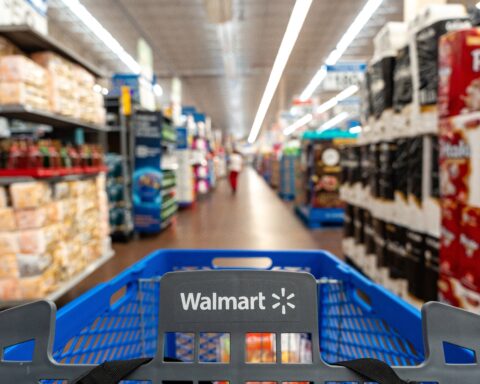

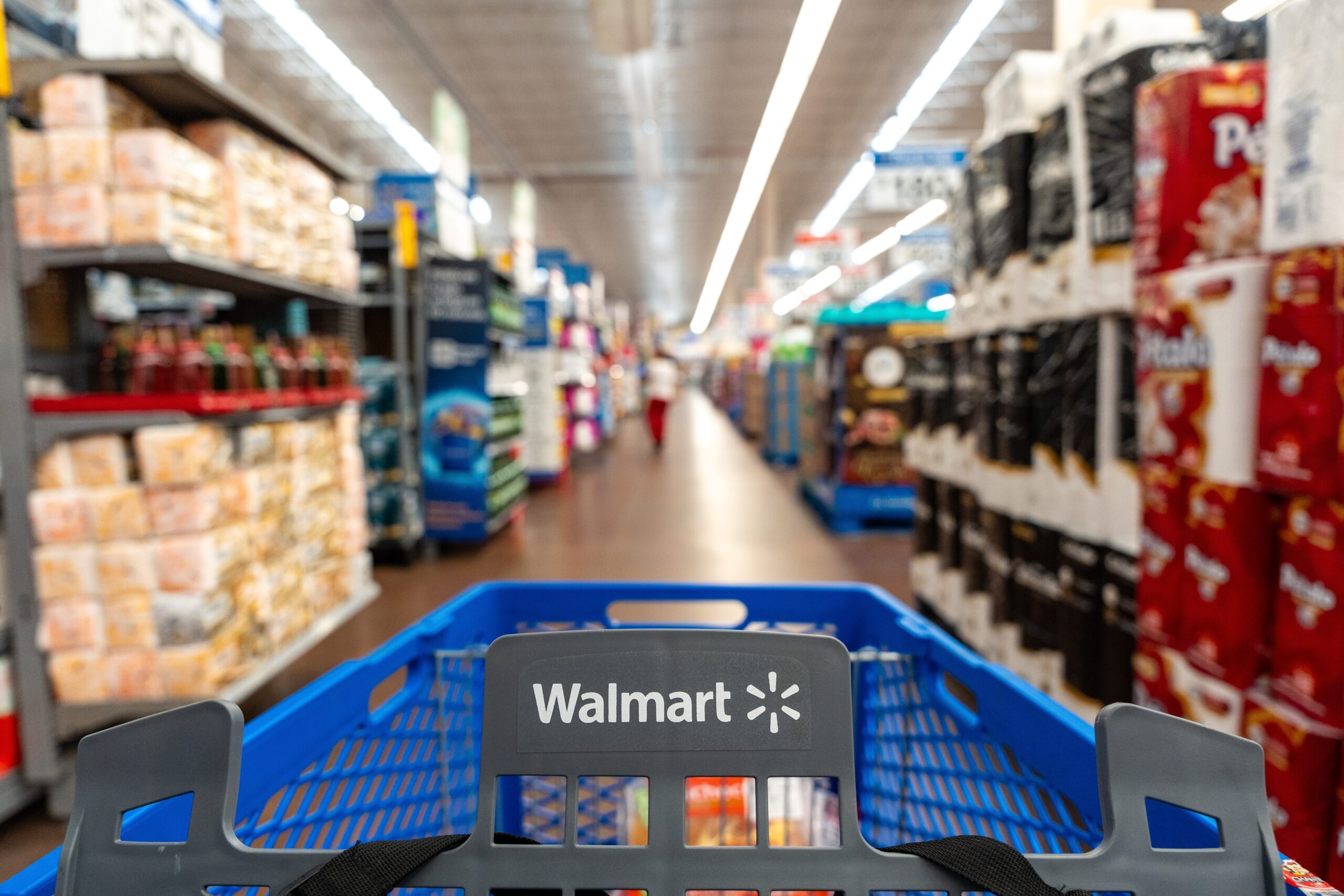
Walmart reported fiscal first quarter 2027 earnings before the opening bell Thursday and delivered the kind of results that should have pleased investors.
$177.8 billion in revenue against a consensus expectation of $174.84 billion, earnings per share of $0.66 meeting analyst estimates, e-commerce sales up 26 percent globally and comparable sales growth above consensus. On paper, it was a solid quarter.
Walmart stock fell anyway.
Shares dropped as much as 4.54 percent at the open, extending a premarket decline that began as soon as investors processed the part of the report that mattered more than the Q1 beat, the forward guidance that came in below what the market had priced in.
The Q2 adjusted earnings per share guidance of $0.72 to $0.74 missed analyst expectations of $0.75.
The full-year revenue guidance of $731.1 to $738.2 billion fell well short of the $748.3 billion that analysts had been expecting.
The full-year adjusted EPS guidance of $2.75 to $2.85 came in below the consensus of $2.91.
Walmart kept all of its full-year guidance unchanged from February, meaning it did not raise its outlook despite beating in Q1, and the guidance it maintained is below where analysts thought it would be.
The market’s response is textbook. When the world’s largest retailer beats on the quarter and drops on the stock anyway, the guidance is always the story.
What The Q1 Numbers Showed
The first quarter of Walmart’s fiscal 2027 year, which covers the three months ended April 30, 2026, was a genuine demonstration of the company’s structural advantages in the current retail environment.
Revenue of $177.8 billion represents 7.3 percent growth year over year in reported terms and 5.9 percent in constant currency, stripping out the effects of foreign exchange.
Both numbers exceed the 5 percent revenue growth that analysts had been modeling as the consensus expectation.
The beat is notable in the context of the consumer environment. Walmart serves approximately 90 percent of American households in some capacity, a market penetration that makes its comparable sales data one of the cleanest single reads on the US consumer that exists in any public earnings report.
The fact that Walmart exceeded expectations in Q1 suggests that consumer spending held up better than models anticipated in the February through April window.
E-commerce growth of 26 percent globally is the number that reflects the longer-term transformation story Walmart has been executing.
The company has spent billions of dollars over the past several years building out its digital retail infrastructure, same-day delivery, curbside pickup, third-party marketplace expansion, and the advertising business that has become a meaningful revenue line.
The 26 percent e-commerce growth rate is significantly faster than the overall company growth rate and reflects the portion of Walmart’s business that carries the highest growth profile.
US comparable sales, the measure of sales at stores and digital channels open at least 12 months, which strips out the effect of new store openings, came in at approximately 4.5 percent, above the 3.9 percent consensus expectation.
That outperformance in comps is the most direct evidence that Walmart is gaining share from competitors rather than simply riding a broad retail tailwind.
Why The Stock Still Fell
The Q1 results established what Walmart did over the past three months.
The guidance established what Walmart believes it will do over the next nine. The market cares more about the next nine months than the last three.
The Q2 adjusted EPS guidance midpoint of $0.73 is two cents below the $0.75 that analysts expected.
Two cents on a stock trading at roughly $130 might seem immaterial, but at the valuation multiple Walmart carries, a price-to-earnings ratio of approximately 47 and a PEG ratio of approximately 4.96, both of which are elevated even for a company of Walmart’s quality and consistency, any guidance shortfall is amplified.
Investors who paid 47 times earnings for Walmart stock are not paying that multiple for a company that guides below consensus on Q2. They are paying it for a company that consistently delivers above.
The full-year revenue guidance tells the larger story. Analysts had been modeling $748.3 billion in full-year revenue for fiscal 2027.
Walmart guided $731.1 to $738.2 billion, a gap of $10 to $17 billion versus consensus. That is not a rounding error. It represents a meaningfully more conservative view of the second half of the fiscal year than the investment community had been pricing in.
The fact that Walmart kept all of its guidance unchanged from February, not raising it despite the Q1 beat, reinforces the conservative posture.
Companies that beat in Q1 and maintain rather than raise their full-year guidance are effectively telling investors that the beat was not indicative of a better trajectory, just better execution in one quarter.
The Fuel Cost Problem
One of the specific drags that Walmart’s earnings call and the subsequent analyst coverage highlighted was operating income headwinds from fuel costs.
Distribution is one of Walmart’s largest cost categories, the company operates one of the most sophisticated logistics networks in the world, with a private truck fleet and a global supply chain that moves billions of dollars of goods every day. When fuel prices rise, distribution costs rise with them.
Fuel prices in 2026 have been elevated by the US-Iran war that began February 28, which has put sustained upward pressure on crude oil and retail petroleum prices throughout the spring.
The same dynamic that is pushing mortgage rates toward 7 percent is adding to Walmart’s cost of moving goods from distribution centers to stores.
The company absorbs some of those costs, passes some on through pricing and sees some reflected in compressed operating margins. All three effects showed up in the Q1 results.
The concern embedded in the guidance is that fuel cost pressure is not going away in Q2 or the back half of fiscal 2027 as long as the Iran conflict continues.
Walmart’s conservative full-year guidance likely reflects a baseline assumption about energy costs that is more cautious than what the consensus had been modeling before the earnings report.
What Walmart’s Results Mean For The Broader Retail Sector
Walmart is often the first major US retailer to report quarterly results because of its fiscal year structure, and its earnings function as a leading indicator for what investors should expect from Target, Costco, Dollar General and the broader retail complex.
The specific signals Walmart’s results send ripple through the sector within hours.
The mixed picture from Thursday’s report, strong Q1 execution, conservative Q2 and full-year guidance, fuel cost headwinds, e-commerce growth continuing, will be read differently by different retail analysts depending on which company they cover.
For Target, the comparable sales outperformance at Walmart raises questions about whether Target is holding its own against its primary competitor.
For Costco, the e-commerce growth number is a relevant comparison point. For the dollar stores, Dollar General and Dollar Tree, the commentary about consumer behavior is the most directly relevant element of any Walmart earnings report, because both categories compete for the same cost-conscious consumer.
InvestingPro’s assessment that Walmart stock was trading above its fair value going into the earnings report, citing the P/E ratio of 47.76 as elevated relative to Walmart’s historical multiples, provided the context for Thursday’s reaction.
When a stock is priced for perfection and the guidance comes in below the consensus expectation, even a quarter that beats on the top and bottom line is not enough to prevent a sell-off.
What This Means For Walmart’s Long-Term Story
None of Thursday’s guidance miss changes Walmart’s fundamental competitive position. The company has approximately 10,500 stores globally and serves approximately 90 percent of American households in its domestic market.
Its e-commerce business is growing at 26 percent. Its advertising business, Walmart Connect, is expanding as a high-margin revenue stream. Its Sam’s Club membership model continues to grow.
The structural advantages that make Walmart one of the most durable business models in global retail are intact.
What the market is recalibrating on Thursday is the near-term growth rate expectation against a multiple that had been pricing in something more aggressive.
The full-year EPS guidance of $2.75 to $2.85 is below the consensus of $2.91. That gap, approximately 6 to 16 cents per share, is not a crisis.
It is a recalibration that, at a stock trading near 48 times earnings, produces a 4 percent decline in a single session.
The world’s largest retailer beat the quarter and the stock fell. Welcome to premium multiple investing.