Stacey King, Bulls Broadcaster And Three-Time Champion, Dies At 59
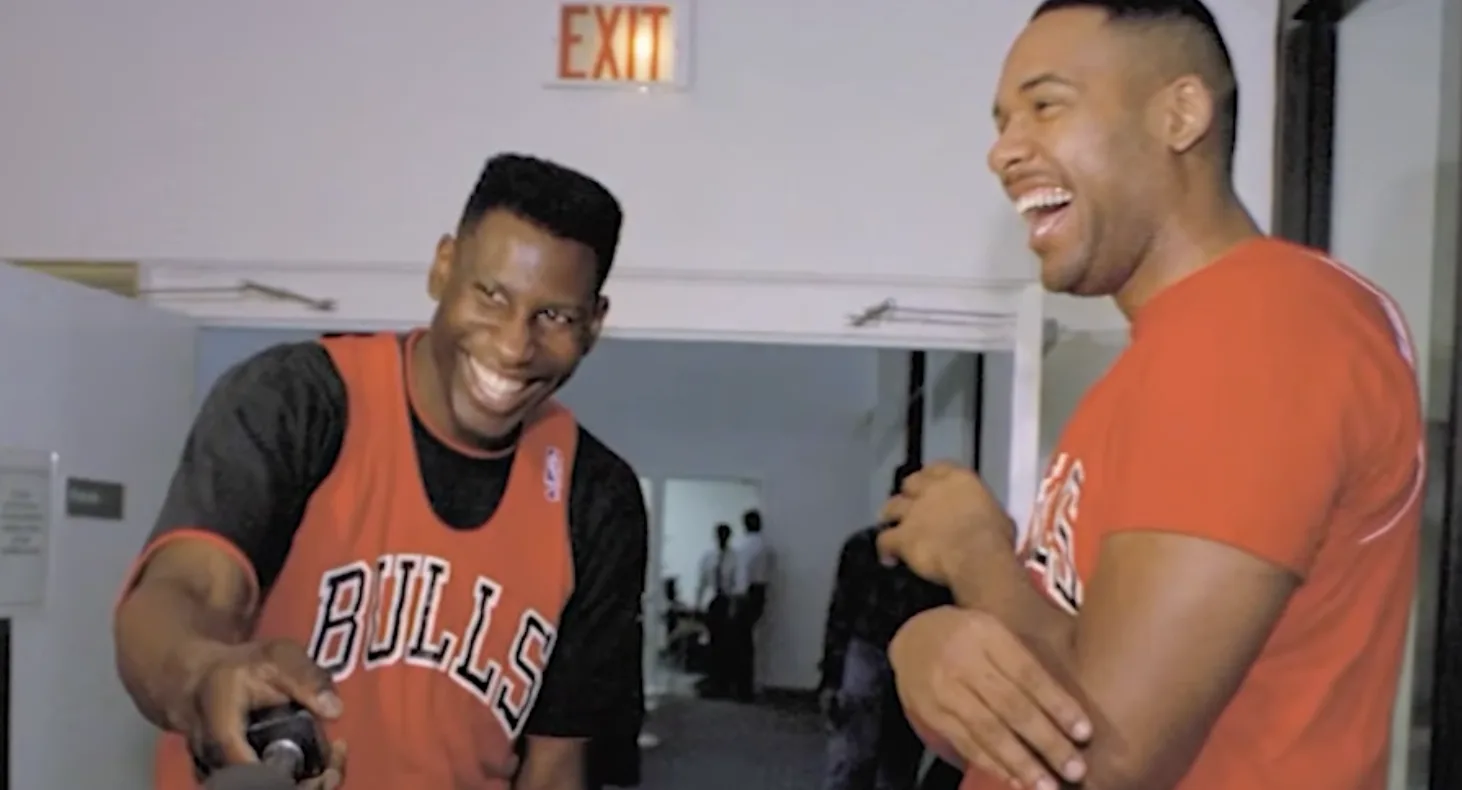
The Chicago Bulls announced Sunday that Stacey King, the former Bulls big man who won three championships alongside Michael Jordan in the first three-peat, spent nearly twenty years as the team's color analyst and became one of the most beloved broadcasters in Chicago sports history, died Sunday morning at his home in River Forest, Illinois. He was 59 years old.
ESPN 1000 co-host David Kaplan reported that King died following a fall at his home. The Bulls have not officially confirmed the cause. The Cook County Medical Examiner's Office said a head autopsy is slated.
He was posting on Instagram on Saturday, June 6, the day before he died. The death was sudden.
"Absolutely devastated to hear that Stacey King has passed away at the age of 59 after a fall at his home," Kaplan wrote on X. "He made watching the Bulls, no matter good season or bad so much fun. God bless you, my friend. RIP."
The man who made a decade of losing Bulls basketball bearable with "Gimme the hot sauce" and "Drive home safely, Chicago! Beep, beep!" is gone at 59.
The Player Before The Broadcaster
Stacey King arrived in Chicago as the sixth overall pick of the 1989 NBA Draft out of the University of Oklahoma, where he had been a First Team All-American.
He was a 6-foot-11 power forward/center whose college career had produced the kind of statistical profile that put him in the lottery, a big man who could score, rebound and defend, and whose professional career would take a different shape than those early projections suggested.
His five years with the Bulls, 1989 through 1994, coincided with the construction and peak of the most dominant dynasty in basketball history. Phil Jackson arrived as head coach in 1989. Scottie Pippen was developing. And Michael Jordan was Michael Jordan.
King's role on those championship teams was not the starring role. He averaged 6.4 points and 3.3 rebounds in 16.9 minutes per game across his career, the numbers of a reserve who gave the starter rotations rest, contributed energy when called upon and played the specific role that role players on championship teams play.
Doing exactly what the coach needs in exactly the minutes allocated without complicating anything. In 1991, 1992 and 1993, the Bulls won the championship. King was on the floor for all three. The ring is the ring regardless of the minutes.
After leaving Chicago in 1994, he finished his NBA career with the Dallas Mavericks, Minnesota Timberwolves, Boston Celtics and Miami Heat before retiring after eight seasons in the league.
He coached in the CBA for several years before making a decision that would define the rest of his professional life and the lives of Chicago Bulls fans who watched his broadcasts for the next two decades.
The Voice That Made Losing Seasons Bearable
The Chicago Bulls after the second three-peat ended in 1998 spent the better part of a decade in various states of rebuilding, retooling and occasionally embarrassing themselves.
The teams that King eventually joined as a broadcaster were not the Jordan teams. They were not always teams that warranted sophisticated analysis or required a color analyst to explain the nuances of championship basketball.
King joined the Bulls broadcasting operation in the 2006-07 season, initially as a studio analyst for pregame and postgame shows before moving to the sideline and the broadcast booth.
He became the team's permanent color analyst in 2007 and spent nearly twenty years calling Bulls games alongside play-by-play partners on NBC Sports Chicago and eventually the Chicago Sports Network.
The persona he brought to those broadcasts was specific and irreplaceable. He coined nicknames for players, some beloved, some argued over, all memorable. He developed catchphrases that became part of Chicago sports culture. "Gimme the hot sauce" when something exciting happened. "Let me step back and kiss myself" for moments of self-satisfaction. "Drive home safely, Chicago! Beep, beep!" as a closing send-off that became a ritual.
"Elizabeth I'm coming again… ahhhh lawd," a reference to the old TV show Sanford and Son that circulated on social media as one of his most iconic calls. The specific cultural register he operated in was the register of someone who grew up in and around basketball and brought the whole of that experience, the humor, the love, the specific joy of the game regardless of the result, into the broadcast booth.
Jerry Reinsdorf, who has owned the Bulls since 1985 and has seen every version of this franchise, chose a specific phrase in his tribute:
"His connection to Chicago, the Bulls and our fans was unlike anything I've ever seen. He made every game — whether we were winning or losing, better."
The phrase "whether we were winning or losing" is the key one. The Jordan years required minimal entertainment value from the broadcast booth, the basketball itself was the entertainment.
The post-Jordan years, the rebuilding years, the years when the Bulls were one of the least compelling professional basketball products in the league — those years required someone to give the audience a reason to stay tuned. Stacey King was that reason for twenty years.
What He Meant To Chicago
Chicago Sports Network president Michael McCarthy's tribute identified something specific about King that distinguishes his legacy from typical broadcaster legacies: "Stacey had a unique ability to connect generations of Bulls fans."
The person who watched the championship teams in 1991 and the person who watched the mediocre teams in 2018 both knew Stacey King, one as the reserve big man on the floor, one as the voice in the booth.
That continuity, player to broadcaster, championship era to rebuilding era, made him the living connective tissue between what the Bulls were and what they were becoming.
Michael Reinsdorf's tribute captured the human dimension behind the professional one. He said King made people feel seen and valued, through broadcasts, through conversations, through photos with fans. The Emmy Award he won for broadcasting reflects the professional achievement.
The reaction on social media Sunday, the thousands of Chicago sports fans posting their memories of his catchphrases and their personal encounters with him, reflects what the professional achievement was built on: a person who genuinely cared about the people he was talking to, whether they were watching him on television or standing next to him at a public appearance.
He was 59 years old. He won three championships. He spent twenty years making Bulls basketball feel like home regardless of the score. He posted on Instagram the day before he died.
"Drive home safely, Chicago. Beep, beep."