Drake London Signs A $141 Million Extension With The Falcons Through 2030
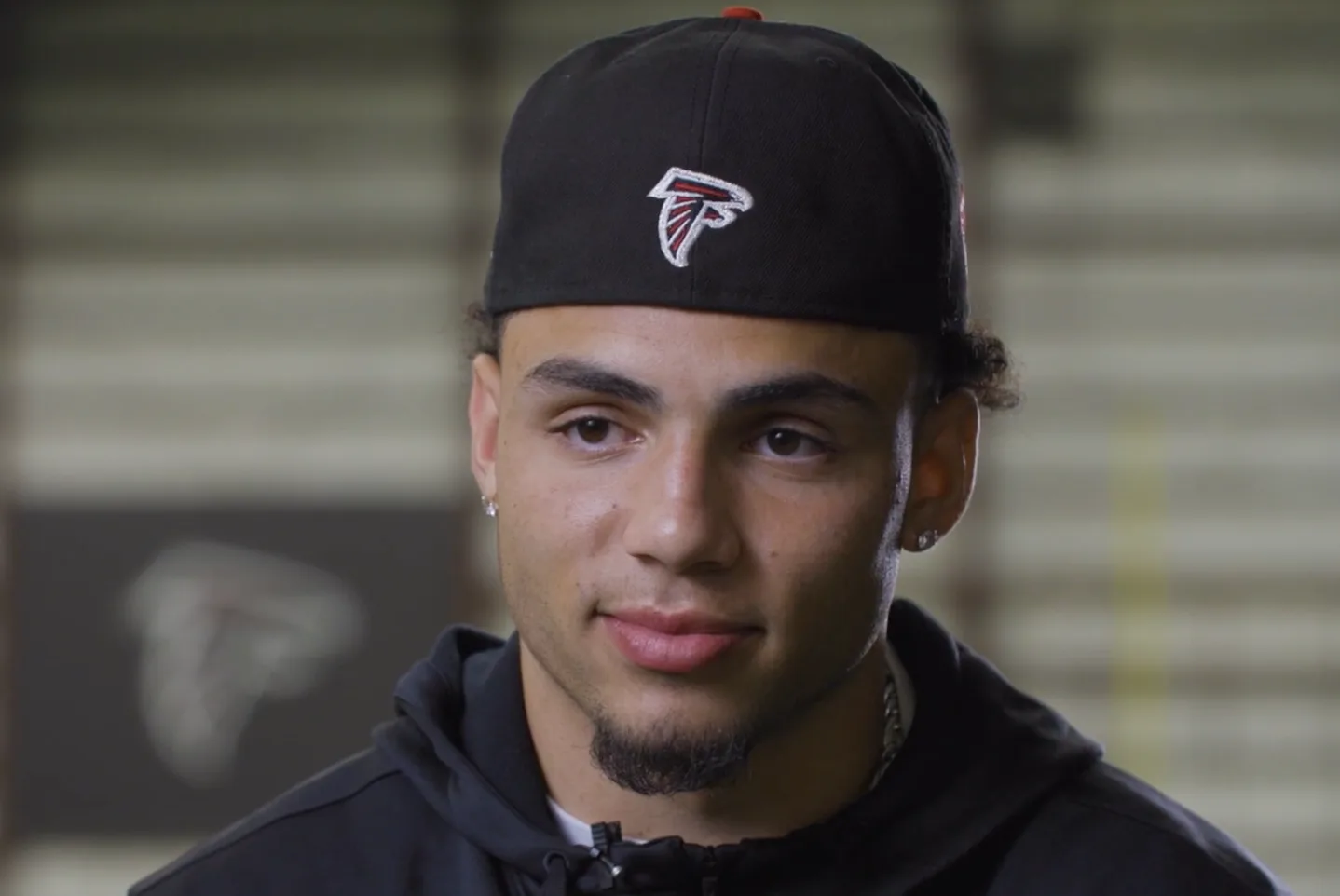
The Atlanta Falcons gave wide receiver Drake London a four-year, $141 million contract extension on Tuesday, $100 million guaranteed, up to $150 million with incentives, an average annual value of $35.25 million that makes him the third-highest-paid receiver in the NFL and the highest-paid skill position player in franchise history.
Ian Rapoport and Adam Schefter reported the deal simultaneously. The extension runs through the 2030 season.
The contract is also the first major deal completed by the new Falcons front office, new general manager Ian Cunningham and new team president Matt Ryan, the former Falcons quarterback who came back to the organization in an executive capacity this offseason.
Their first significant decision as the leadership team of this franchise was to lock up the 24-year-old receiver who has been its most consistent offensive player across four seasons of significant quarterback instability.
That instability is the most important context for understanding why $141 million makes complete sense.
Drake London has played his first four NFL seasons with four different Week 1 starting quarterbacks. Marcus Mariota threw him his first passes. Desmond Ridder threw him his second-year targets.
Kirk Cousins threw him the ball for a career-best 2024 season of 100 catches, 1,271 yards and nine touchdowns. And Michael Penix Jr., the quarterback the Falcons drafted eighth overall in 2024, took over late in 2025 and averaged 117 yards per game with London in the games Penix started. Through all of it, London put up numbers.
The Receiver Market And Where He Sits In It
The four-year, $141 million deal places London third among the NFL's highest-paid receivers by average annual value, behind Jaxon Smith-Njigba of the Seattle Seahawks at $42.15 million and Ja'Marr Chase of the Cincinnati Bengals at $40.25 million but ahead of Justin Jefferson's $35 million deal and CeeDee Lamb's $34 million.
The market London is being paid against is the product of a receiver economy that has been moving rapidly upward across the past two offseasons. Smith-Njigba and Chase both received contracts that reset the ceiling for the position.
Jefferson's $35 million deal, when it was signed, was itself a record. The speed at which the market has accelerated means that London's $35.25 million AAV, third in the league at the moment the deal is signed, will not remain third for long. CeeDee Lamb's $34 million, which was itself a record when signed, has already been surpassed by three players.
What the $35.25 million figure says about how Cunningham and Ryan view London is clear: they believe he belongs in the top tier of NFL receivers, and they were willing to pay him accordingly before he had made a Pro Bowl.
That last detail is the one that has generated the most discussion since the deal was reported. Drake London has never been selected to a Pro Bowl. He had a season in 2024 that by any conventional measure was a Pro Bowl performance, 100 catches, 1,271 yards, ninth in receptions and ninth in touchdowns in the NFL, and was not selected.
He accepted the situation, played through hip and knee injuries in the second half of 2025 when he missed five games and still finished with 68 catches for 919 yards and seven touchdowns in twelve games.
He has never complained publicly about the Pro Bowl snubs. He has simply continued producing.
The Four-Year Quarterback Problem
The most significant thing about Drake London's career statistics is not the numbers themselves but the conditions under which they were produced. Every receiver's output is partly a function of the quarterback throwing to them.
The argument against paying London top-of-market money before Tuesday was that his numbers reflected an inconsistent system, that it was impossible to project what he could do with stable, elite quarterback play because he had never experienced it.
The argument for paying him top-of-market money is exactly the inverse: he produced those numbers without stable, elite quarterback play. The 309 catches, 3,961 yards and 22 touchdowns across four seasons have come with a revolving door of quarterbacks, offensive systems and coaching staffs.
When Penix took over for three late-season starts in 2025 and London averaged 117 yards per game in those games, it offered the first glimpse of what London with a legitimate developmental partnership at quarterback might look like.
The 2026 season presents a new variation on the quarterback question. Tua Tagovailoa, the former Miami Dolphins starter who missed significant time in 2025 with injury before releasing for free agency, signed a one-year deal with Atlanta and had the early lead in OTAs under new head coach Kevin Stefanski.
Penix, recovering from knee surgery, has impressed Stefanski with his progress and provides a path to the starting job if his knee holds. London has watched this play out before. He will catch passes from whoever lines up behind center, and he will be productive regardless.
The New Falcons Leadership And What The Deal Signals
The fact that London's extension is the first major transaction of the Cunningham-Ryan era at the Falcons is intentional and meaningful.
When a new front office takes over an NFL franchise, its initial contract decisions communicate what it values and how it plans to build. Ian Cunningham and Matt Ryan chose to start by paying the player who had been the most reliable offensive contributor in Atlanta through four years of organizational upheaval.
Ryan in particular has a specific kind of credibility with this decision. As the Falcons quarterback from 2008 through 2021, including the Super Bowl season of 2016, Ryan understands intimately what it means to have a receiver you can trust, what it costs the offense when you do not, and what kind of targets make a franchise quarterback's career.
He watched London produce through quarterback instability that Ryan himself never faced at the same level. The decision to pay him is informed by that understanding.
The extension also provides stability for whoever wins the 2026 quarterback competition. Whether Tagovailoa or Penix is throwing passes in September, they will be throwing to a receiver who has agreed to be in Atlanta through 2030, a long-term commitment that allows an offensive system to be built around him rather than through him.
Kyle Pitts And The Next Deal
London's extension raises the immediate question of what happens with tight end Kyle Pitts, the No. 4 overall pick in 2021 who had a career-best season in 2025 and is currently playing the 2026 season on the franchise tag at approximately $16 million.
The July 15 deadline for teams to sign franchise-tagged players to long-term extensions creates a specific timeline pressure for a decision that the Falcons must now make on a different scale than the London deal.
Pitts, London and Bijan Robinson represent the nucleus of an Atlanta offense that has consistent talent at every skill position. Locking up all three long-term would give the franchise an offensive core that the quarterbacks competing for the 2026 starting job — or whoever succeeds them, would inherit.
The London deal gives the franchise the credibility of paying market value when it is warranted. Whether that credibility extends to Pitts before July 15 is the next question the Cunningham-Ryan front office has to answer.
London has his money. He has never made a Pro Bowl and has the contract of someone who has been to several. He has played for four Week 1 quarterbacks and produced for all of them. He is 24 years old and signed through 2030.