John Lithgow Won A Tony At 80 And Set Two Records Doing It
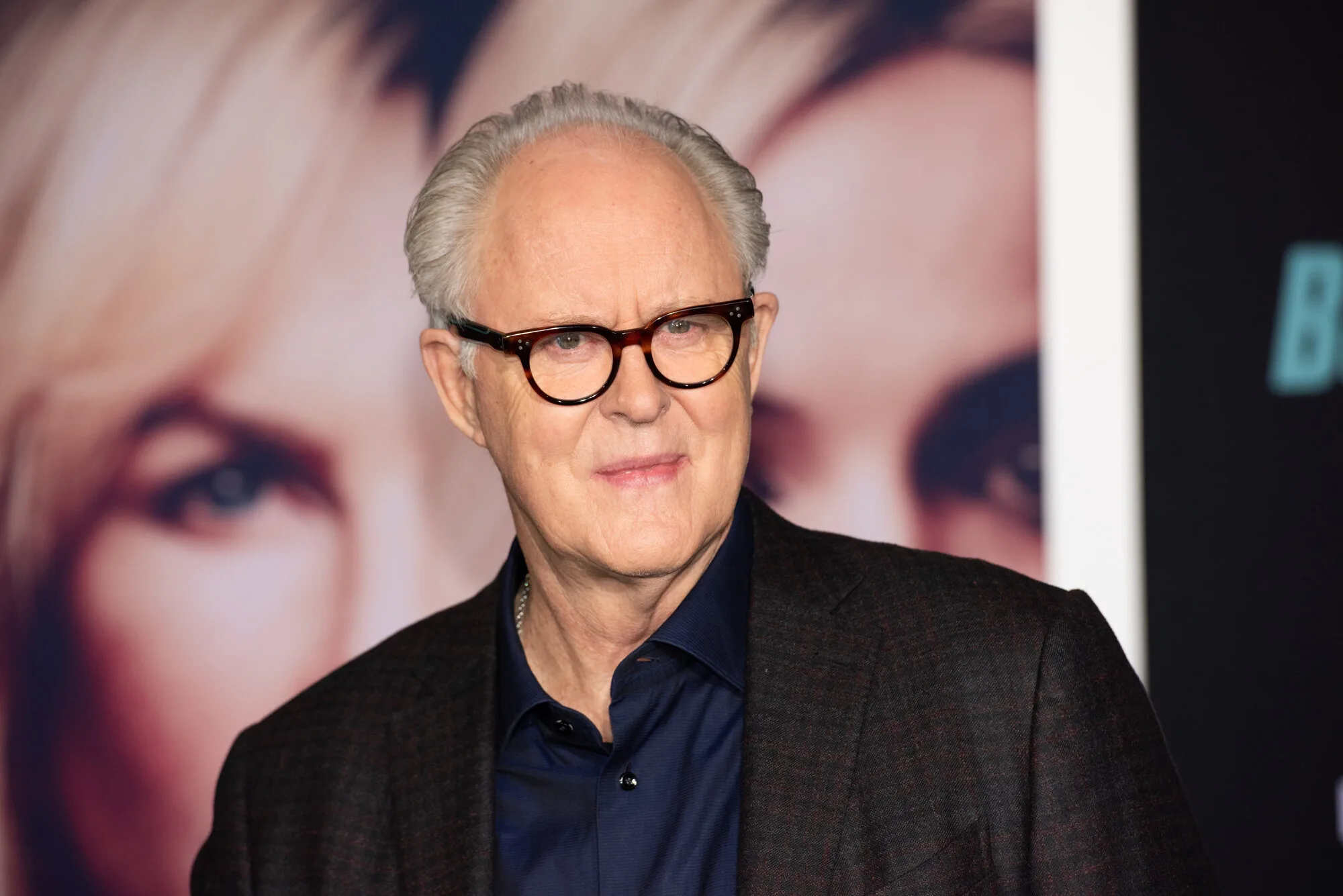
John Lithgow stood at the podium at Radio City Music Hall on Sunday night, looked out at the other nominees in the Best Actor in a Play category, Will Harrison, Nathan Lane, Daniel Radcliffe and Mark Strong, and delivered the acceptance speech of the evening. "Uh, the other gentlemen in my category, you're all marvelous actors. You all deserve this. I got it."
Then he noted that it had been 53 years since his first Tony Award and pointed out a coincidence that the Tony Awards ceremony rarely produces: his first win was for a play that originated at London's Royal Court Theatre.
His latest win was for a play that also originated at London's Royal Court Theatre. Fifty-three years apart. The same venue on the same continent. "Two Tony bookends with 53 years between them."
The win for Giant, Mark Rosenblatt's play about Roald Dahl's antisemitism controversy in the 1980s, made Lithgow the oldest man in the history of the Tony Awards to win a competitive acting prize, at 80 years old, surpassing the prior record of 77.
It also made him the only person ever to hold the record for the longest gap between competitive acting Tony wins, 53 years, well ahead of the 43-year gap that Angela Lansbury previously held.
It made him one of only four performers in Tony history to win awards in three different acting categories.
"I'm such a lucky actor," Lithgow said.
The Play And The Performance
Giant is not a comfortable play. It is built around one of the most beloved children's authors in literary history, Roald Dahl, the man who wrote Charlie and the Chocolate Factory, James and the Giant Peach, Matilda and The BFG, at a moment when that reputation collided with something deeply troubling.
Dahl, in the 1980s, made statements that were explicitly antisemitic. He drew fierce public backlash. The play examines the specific human complexity of that collision, how someone who created worlds of extraordinary imagination and moral clarity for children could also hold and express views of this kind.
Lithgow originated the role in London, at the Royal Court Theatre, where the play had its world premiere, before transferring to the West End at the Harold Pinter Theatre. He won the Olivier Award for Best Actor for the London run, the British theatre's highest honor for performance.
The Broadway production brought the play and Lithgow's performance to American audiences for the first time.
His competitors for the Tony Award were formidable. Nathan Lane was nominated for Arthur Miller's Death of a Salesman, one of the most decorated theatre actors of his generation in a revival of one of the most significant plays in the American repertoire.
Daniel Radcliffe was nominated for Every Brilliant Thing. Mark Strong for Oedipus. Will Harrison for Punch. The category was exceptional.
Lithgow won. He was 80 years old.
The 53-Year Gap
John Lithgow's first Tony Award arrived in 1973, the year of his Broadway debut, playing in The Changing Room, an English play by David Storey that was receiving its American premiere. It won him the award for Best Featured Actor in a Play. He was 27 years old.
It was the beginning of a career that would take him from Broadway to Hollywood to streaming television and back to Broadway in ways that have made him one of the most recognizable performers across every medium for five decades.
His second Tony came in 2002, 29 years after the first, when he won Best Leading Actor in a Musical for Sweet Smell of Success, the adaptation of the classic 1957 film.
A 29-year gap between Tony wins was itself unusual. Few performers maintain enough sustained theatrical activity to return to Broadway in competitive contention across three decades.
The third win, 24 years after the second and 53 years after the first, produces a span between first and latest Tony that has no historical precedent. Angela Lansbury's record of 43 years between wins was itself extraordinary, a performer whose career sustained the quality and the ambition required to compete for the theatre's highest honor across more than four decades. Lithgow has now extended that record by a decade.
The coincidence of both bookend wins involving plays from London's Royal Court Theatre is the specific detail that elevated his acceptance speech from gracious to genuinely moving.
Lithgow did not engineer that connection, he could not have known when he appeared in The Changing Room in 1973 that 53 years later he would win again for a play from the same London institution. It arrived as the kind of symmetry that careers sometimes produce when they are long enough and full enough that patterns can emerge that no one designed.
The Three-Category Distinction
The third record established Sunday is the least dramatic of the three but the most technically demanding to achieve.
John Lithgow has now won Tony Awards in three different acting categories: Featured Actor in a Play, Leading Actor in a Musical, and Leading Actor in a Play.
The distinction requires not just longevity but versatility, the ability to compete at the highest level in the full range of theatrical performance.
Only four performers in Tony history have won in three or more acting categories. Kevin Kline and Boyd Gaines have both won in three categories.
Audra McDonald, widely considered the greatest stage actress of her generation, with six Tony Awards total, has won in four. Lithgow now joins that group.
The specific spread of his three wins communicates something about the range. Featured Actor in a Play in 1973, the supporting performance, the ensemble role, the debut. Leading Actor in a Musical in 2002, the technical demands of singing and acting combined, at the center of a large commercial production.
Leading Actor in a Play in 2026, the dramatically complex, morally uncomfortable central role, the kind of performance that requires both craft and the specific wisdom that a career of 53 years can produce.
The Career Behind Sunday's Record
John Lithgow was born in Rochester, New York in 1945, grew up in a theatrical family and arrived on Broadway in 1973 after training that included a Fulbright scholarship to the London Academy of Music and Dramatic Art.
The London connection, the institution that gave him his first Broadway opportunity, is the same institution that gave him his latest.
He has won Emmy Awards for 3rd Rock from the Sun and for his portrayal of Winston Churchill in The Crown. He played the Trinity Killer on Dexter in a role that won him an Emmy.
He voiced Lord Farquaad in the original Shrek. He wrote the Dumpty Trilogy of political satire books during the Trump era.
He has written children's books, recorded children's albums, written a memoir about his career and appeared in dozens of films and television productions.
He is 80 years old. He played Roald Dahl on Broadway. He won his third Tony Award. He did so 53 years after his first. He held up the award, acknowledged that the other nominees all deserved it, and said he was lucky.
The other nominees probably agreed.