SpaceX IPO Priced At $135 Poised For Release, Will Make Elon Musk The First Trillionaire
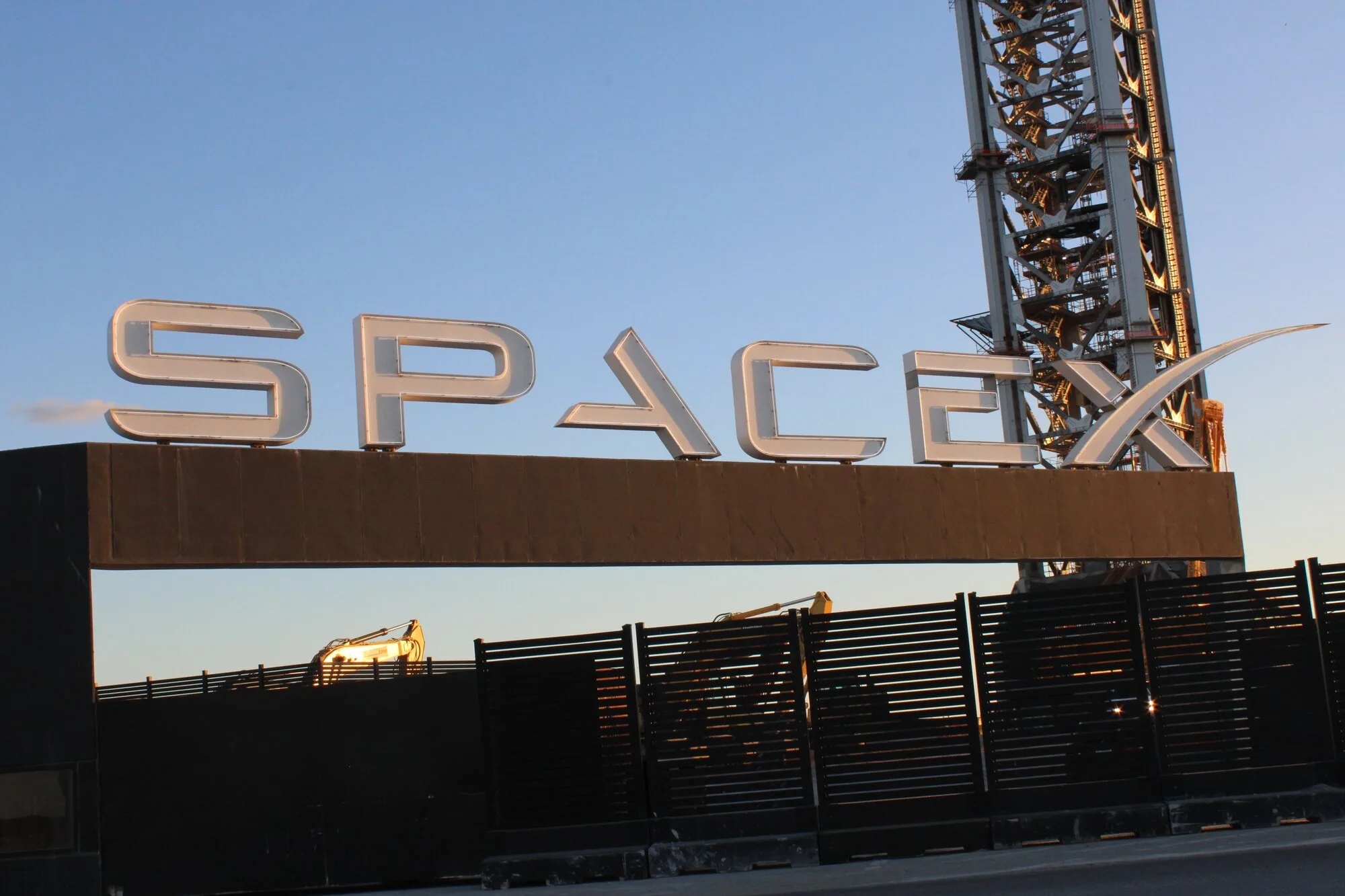
SpaceX filed its updated S-1 prospectus on Wednesday setting a fixed IPO price of $135 per share, an unusual choice that signals the company has more demand than it knows what to do with, valuing Elon Musk's rocket company and its xAI subsidiary at approximately $1.77 trillion and planning to raise $75 billion in the largest initial public offering in the history of financial markets.
The company will debut on the Nasdaq on June 12. Goldman Sachs is the lead banker, followed by Morgan Stanley, Bank of America, Citigroup and JPMorgan Chase.
The previous record for the largest IPO ever completed was Saudi Aramco's $29.4 billion offering in 2019. SpaceX is raising $75 billion, more than two and a half times that record, in a single transaction.
If the underwriters exercise their full overallotment option of 83.33 million additional shares at the $135 price, the total raise reaches approximately $86 billion.
For Musk, the CNBC article that Troy linked captures the specific mathematical consequence, at a $1.77 trillion valuation, his SpaceX stake alone is worth $866.5 billion.
Add his Tesla holdings of approximately $355 billion and options that could add $100 billion more, and Elon Musk becomes, upon the IPO closing, the world's first trillionaire.
The Polymarket odds on that milestone happening before 2027 stood at 72 percent in early 2026. On June 12, if the IPO proceeds as filed, those odds become a certainty.
What Is SpaceX?
SpaceX was founded by Musk in 2002 with the explicit goal of making humanity multiplanetary, of building the rockets that would eventually carry people to Mars.
That goal, which sounded like science fiction for the first decade of the company's existence, has been the organizing principle of an organization that has along the way completely transformed the global launch industry, built the world's largest satellite internet constellation and made reusable rocketry, which the aerospace establishment once called impossible, routine.
Falcon 9 is the most flown rocket in American history. It has completed more than 350 successful launches.
Individual Falcon 9 boosters have flown more than 20 times each. The cost of launch per kilogram to low Earth orbit has dropped by more than 90 percent from what it cost when SpaceX began operations, a reduction that has opened commercial access to space for companies, countries and researchers that could not previously afford it.
Starlink, the satellite internet constellation that SpaceX began deploying in 2019, now serves more than 7 million subscribers globally, providing broadband connectivity to rural and underserved areas, to maritime and aviation operators and, most visibly, to Ukraine, where Starlink terminals became the backbone of the country's wartime communications infrastructure.
Starlink is the company's largest revenue driver and the business that most directly explains how a rocket company generates the cash flows that support a $1.77 trillion valuation.
The IPO filing, the first time SpaceX's financial information has ever been publicly available in any form, gives investors their first look at the revenue and earnings numbers behind the valuation.
The specific financial details from the S-1 are the most closely watched numbers in the investment world this week.
The xAI Merger That Changed The Offering
The SpaceX that is going public on June 12 is not the SpaceX that existed at the start of 2026.
On February 2, Musk completed an all-stock transaction that made xAI, his artificial intelligence company, the maker of the Grok large language model, a subsidiary of SpaceX. The deal valued the combined entity at $1.25 trillion at the time of closing. Four months later, the IPO is pricing the combined company at $1.77 trillion.
The xAI acquisition added a specific dimension to the SpaceX story that made it more complicated for some investors and more compelling for others.
The complicating dimension is the web of related-party transactions that the merger created, xAI purchased $269 million worth of Tesla Megapacks in April 2026, and Tesla previously sold $430 million worth of backup batteries to xAI.
Tesla owns 18.99 million SpaceX shares valued at $2.56 billion at the IPO price. Musk controls SpaceX, xAI, Tesla and X, and the financial relationships between those entities are now embedded in the public company that will begin trading on June 12.
The prospectus addresses this directly and without softening: "We have historically collaborated with Tesla through commercial, licensing, and support agreements." The disclosure is honest.
The question of whether those collaborations are conducted at arm's length fair market value or whether Musk's control of both companies creates undisclosed benefits to one at the expense of the other is the governance question that prospectus disclosures can identify but not resolve.
The Governance Structure That Gives Musk Total Control
The SpaceX IPO is structured in a way that ensures the public market purchases exposure to the company's economics without purchasing meaningful influence over its direction.
The shares being sold to the public are Class A shares, each carries one vote. Musk holds Class B shares, each carries ten votes. After the IPO, Musk will control more than 82 percent of the voting power of the company.
The prospectus states this with full legal clarity:
"Mr. Musk will have the power to control the outcome of matters requiring shareholder approval, including election of all our directors."
This is not an unusual structure for a founder-controlled technology company going public, Meta, Alphabet and Snap all have multi-class share structures that concentrate control in founders' hands.
What makes the SpaceX structure more extreme is both the magnitude of the voting imbalance (10:1 rather than the more common 10:1) and the additional layer of complexity that Musk's control of Tesla, xAI and X adds to the governance picture.
An investor who buys Class A SpaceX shares on June 12 is investing in a company whose direction is controlled by a person who simultaneously runs three other major enterprises with intersecting financial interests.
Musk was also granted 1 billion performance-based Class B shares in January 2026, a vesting award that adds to his ownership position if SpaceX achieves specific milestones and that further concentrates economic and voting control if fully vested.
The Record It Shatters And What Comes After
The financial records that the SpaceX IPO will break span multiple categories. The $75 billion raise, if completed at $135 per share for 555.6 million Class A shares plus any overallotment exercise, shatters Saudi Aramco's $29.4 billion record by a margin that has no historical precedent.
The $1.77 trillion valuation at IPO would make SpaceX the seventh-largest company in the United States by market capitalization, surpassing Tesla's current $1.6 trillion valuation, which means Musk's rocket company, upon going public, will immediately be worth more than his electric vehicle company.
The Musk net worth milestone, the first human trillionaire, is the number that will dominate financial media coverage of the June 12 debut.
At $866.5 billion in SpaceX shares plus $355 billion in Tesla plus options that could add $100 billion, the paper net worth crosses $1 trillion on the day the company begins trading.
The caveat is that paper net worth and accessible net worth are different things, the majority of Musk's wealth is in illiquid equity positions that cannot be sold without market impact, but by the conventional Forbes and Bloomberg Billionaires Index methodology, Musk becomes the world's first trillionaire on June 12 if the IPO prices and opens as filed.
SpaceX began with a mission to reach Mars. It is going public at $1.77 trillion. June 12 is eight days away.