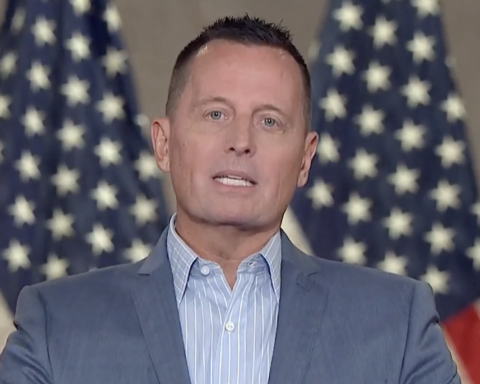

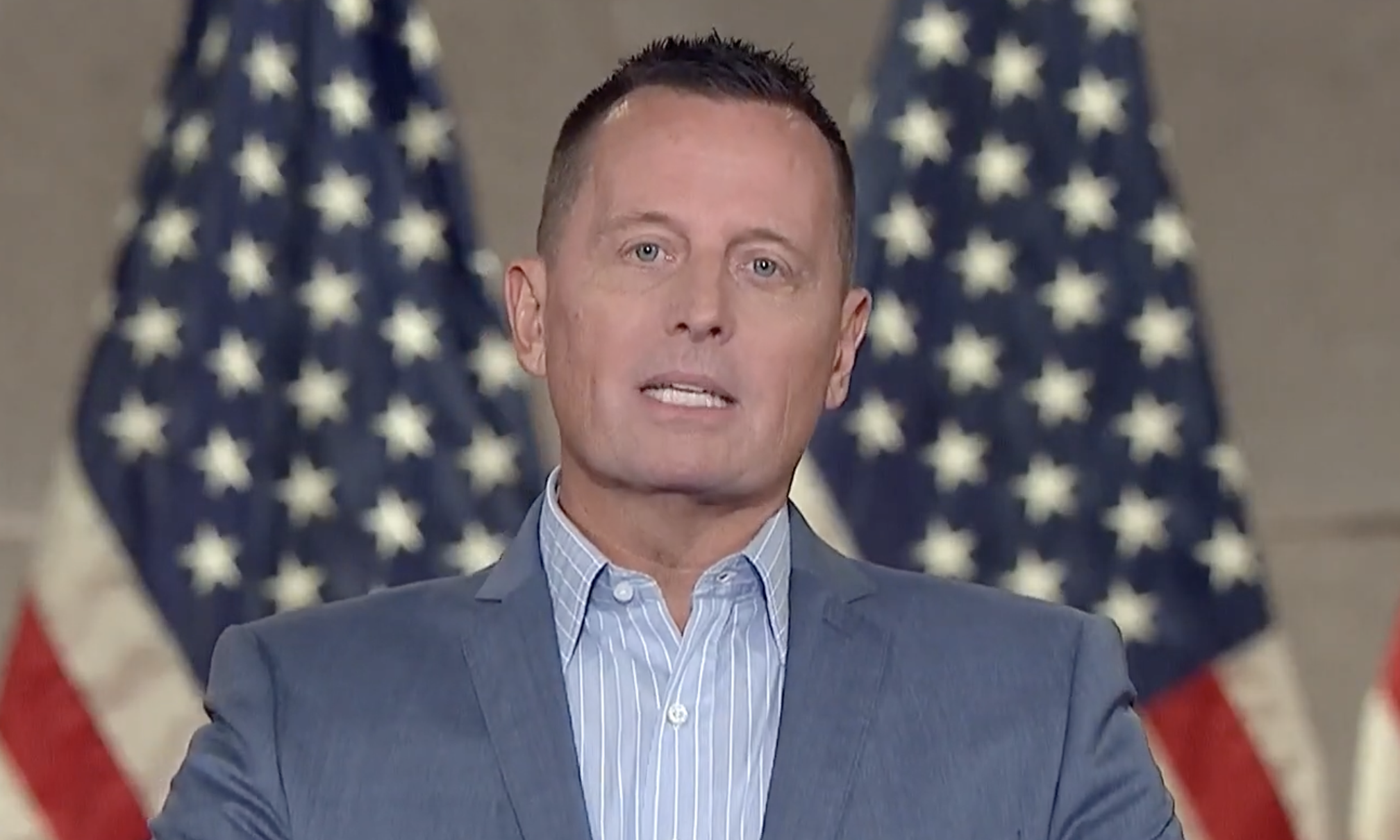
Ric Grenell is stepping down as president of the Kennedy Center on Monday, and the man replacing him is already fielding personal phone calls from President Trump about paint colors, marble, and seating.
Axios first reported the transition today. Grenell will be succeeded by Matt Floca, the venue’s vice president of facilities operations.
The change will be announced at a Kennedy Center Board of Directors meeting at the White House on Monday, which Trump is expected to attend.
The board is also expected to use that meeting to formally approve a two-year shutdown of the venue beginning July 4.
Grenell will not disappear entirely, he will remain involved as an unpaid consultant.
Who Is Matt Floca?
Floca is not a name the arts world knows. He is a facilities man, not a programming executive or a cultural figure, and that appears to be precisely why Trump likes him.
Before joining the Kennedy Center, Floca worked for the DC government as associate director for sustainability and energy.
According to Axios, Trump has taken a personal liking to him and has been calling him directly to discuss his vision for the renovation, including specific preferences on paint color, seating, and the addition of marble throughout the building.
The choice of a facilities and operations executive to lead the nation’s premier performing arts venue at the moment it is about to undergo a complete shutdown and rebuild tells you everything about what the next two years at the Kennedy Center are going to look like.
This is a construction project now. The artistic institution part comes later or it doesn’t.
Why Is Grenell Leaving?
Grenell took the helm of the Kennedy Center in February 2025 as part of Trump’s wholesale takeover of the institution. Trump announced the appointment on Truth Social with the message: “RIC, WELCOME TO SHOW BUSINESS!”
Grenell simultaneously holds the role of Trump’s envoy for special missions, a portfolio that has included diplomatic work across multiple regions.
The Kennedy Center role was always a secondary appointment, and with the venue about to close for two years, there is simply less for a president to do.
The renovation phase is an infrastructure and construction job, not a programming and management one.
Under Grenell’s tenure, the organization was gutted and rebuilt in Trump’s image.
The board was replaced entirely with Trump allies. Trump was installed as chairman. In December, the board voted to rename the venue the Donald J. Trump and John F. Kennedy Memorial Center for the Performing Arts, with new signage going up on the building’s exterior shortly after.
The renaming triggered a wave of artist cancellations that the Kennedy Center never recovered from.
Grenell also oversaw large-scale staff layoffs, and Kennedy Center officials say that as a result of those cost-cutting measures, the organization is no longer paying staff with debt reserves, a financial stabilization Grenell’s supporters point to as a genuine achievement.
The July 4 Shutdown And What It Means
Trump announced the two-year closure on February 1, posting on Truth Social that the Trump Kennedy Center would close on July 4, 2026, America’s 250th anniversary, for “Construction, Revitalization, and Complete Rebuilding.”
He promised a “Grand Reopening that will rival and surpass anything that has taken place with respect to such a Facility before” and said financing was “completed, and fully in place,” without elaborating on the source of funds.
Congress allocated $257 million for the Kennedy Center in last year’s “One Big Beautiful Bill,” designated for capital repair, restoration, maintenance backlog, and security structures.
Whether that figure covers the full scope of Trump’s stated ambitions remains unclear.
Trump told reporters the project would cost around $200 million, but has also described wanting a “complete rebuilding,” language that does not square with a $200 million budget for a venue of this scale and complexity.
When pressed in February on whether he planned to tear the building down, Trump said:
“I’m not ripping it down. I’ll be using the steel. So, we’re using the structure. We’re using some of the marble and some of the marble comes down, but when it’s opened, it’ll be brand new and really beautiful. The steel will all be checked out because it’ll be fully exposed.”
An internal memo obtained by NPR painted a considerably more modest picture.
The document, sent to tour leaders and some staffers, described planned renovations including new seating in the Concert Hall with marble armrests, new carpeting, replacement of the wood flooring on the Concert Hall stage, strategic painting, and upgrades to HVAC, safety, and electrical systems.
The gap between Trump’s “complete rebuilding” framing and the internal memo’s more conventional renovation scope has not been explained publicly.
Why The Closure Is Really Happening
The official explanation for the two-year shutdown is deferred maintenance and a desire to renovate without working around live performances. Both things are real, multiple sources familiar with the building confirmed to CNN that there were ten to fifteen years of deferred maintenance when Trump returned to office, including upgrades needed for the orchestra pit, bathroom renovations, and HVAC systems.
The Kennedy Center expansion completed during Trump’s first term in 2019 cost $250 million in private funds, and the main hall had not had a significant renovation since.
But the shutdown announcement followed directly from a booking crisis that had become untenable.
Since Trump added his name to the building in December, prominent artists and organizations began pulling out in large numbers. Composer Philip Glass withdrew the world premiere of his symphony based on Abraham Lincoln scheduled for June.
The Washington National Opera, which had been a resident company at the center for decades, announced it was leaving, citing a “financially challenging relationship” with current leadership.
A Washington Post analysis of Kennedy Center ticket sales in October found that sales had collapsed, even before the renaming.
By early 2026, the Kennedy Center did not have enough confirmed bookings to put together a 2026-2027 programming season.
Normally, by February, a performing arts venue of this size would have its fall season largely locked.
The Kennedy Center had almost nothing. A source familiar with the situation told CNN that “the artist boycott across all genres was becoming untenable” and had made it “quite impossible for them to produce a series of any significance.” The closure was the exit ramp.
The Legal Challenge
Representative Joyce Beatty of Ohio, a Democrat who sits on the Kennedy Center board as an ex officio congressional member, has filed a lawsuit to stop both the renaming and the closure.
Beatty argues that the center was established by congressional legislation as a living memorial to President John F. Kennedy, that adding Trump’s name required congressional approval it never received, and that closing the center for two years is a decision Congress should have been consulted on.
Legal analysts say her complaint faces significant procedural hurdles, and it has not so far delayed the board’s plans.
What Grenell Did — And Didn’t Do
The Kennedy Center under Grenell became a vehicle for Trump’s cultural and political priorities in ways large and small. Trump hosted the Kennedy Center Honors for the first time in December, becoming the first president to emcee the event.
The center hosted FIFA’s World Cup draw in its marble halls. The premiere of the documentary Melania was held there in January.
Trump used his visits to the building to publicly discuss his renovation vision, appearing on the Concert Hall stage and calling the current condition “dilapidated” and “dangerous,” characterizations that neither Grenell nor the Trump administration has backed with independent engineering assessments.
What Grenell did not do, and what the venue never recovered from, was solve the programming crisis created by the politicization he oversaw.
The institution that began as a national cultural center and became, under congressional designation, a living memorial to a slain president, is now closing for at least two years.
The man who will oversee what it becomes next is a facilities operations executive who takes calls from the president about paint colors.
The shutdown begins July 4.