Costco Kirkland Product Price Drops Hit Four Items And Here Is What Changed
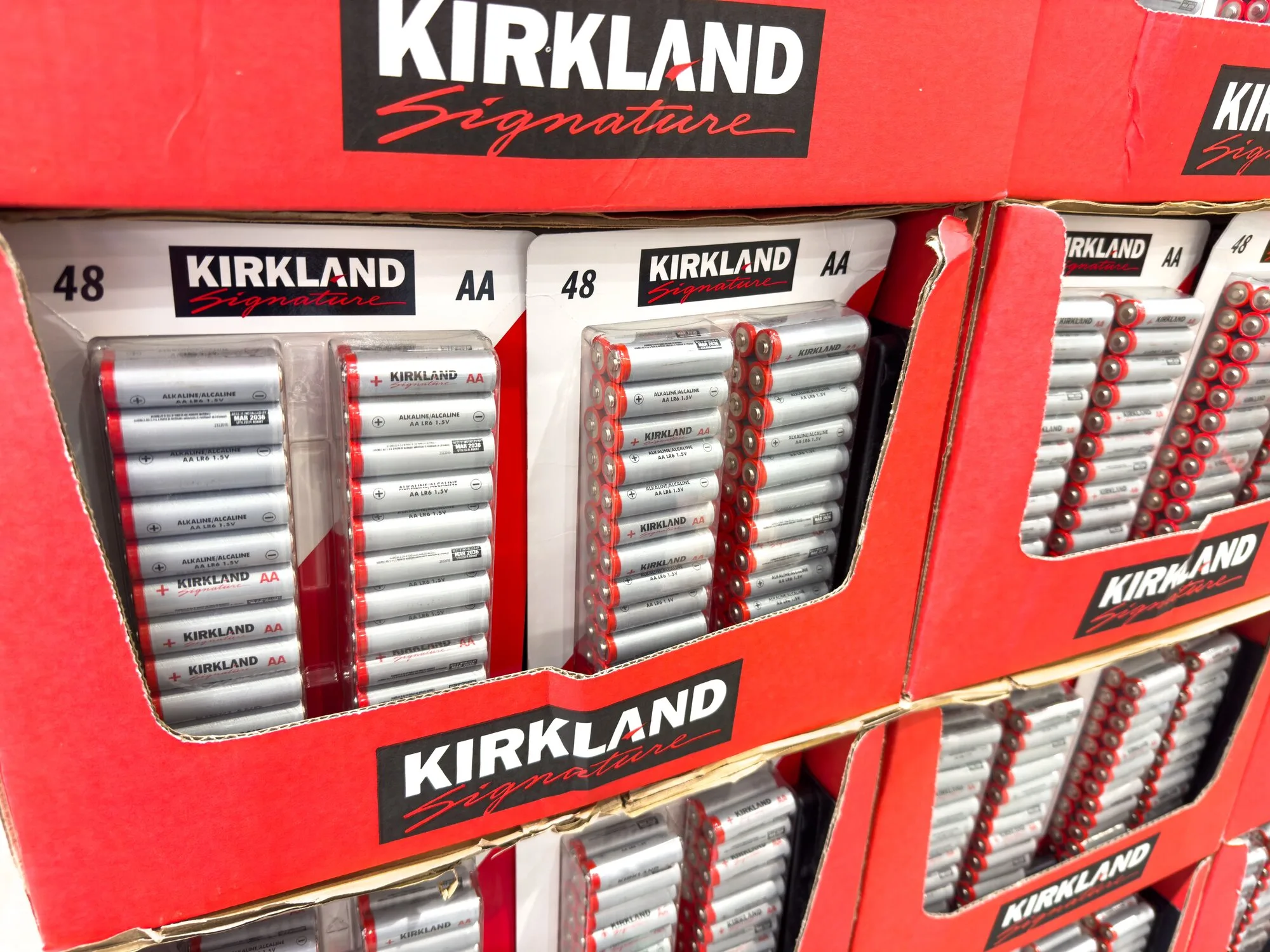
Costco cut prices on four Kirkland Signature products during its third fiscal quarter and did not tell anyone. No email to members. No in-store signage. No press release. If you bought Kirkland Crispy Wings last month, they cost $14.99.
If you bought them before that, they cost $16.99. The difference is two dollars and the way you found out about it, if you found out about it at all, was either noticing the new price at the register or reading about it when the details surfaced from the company's May 28 earnings call.
That is the Costco way. No sales, no coupons, no promotional periods, no "this weekend only." When Costco can lower a price, it lowers the price and the price stays lower. The announcement, if there is one, comes buried in a quarterly earnings call.
The four products and their new prices: Kirkland Signature Crispy Wings are now $14.99, down from $16.99. Kirkland Signature Milk Chocolate Almonds are now $18.99, down from $19.99.
Kirkland Signature Golf Balls are now $29.99, down from $32.99. Kirkland Signature King Size Sheets are now $79.99, down from $89.99. The largest drop is $10. The smallest is $1. Combined, they touch food, home goods and sporting equipment, which is most of the Costco experience.
The Chocolate Almonds
The milk chocolate almonds have had a specific and vocal online complaint community for the past year. A Canadian shopper on Reddit captured the arc of it clearly. The 1.5 kg bag of Kirkland chocolate-covered almonds was once $17, then climbed to $20, then reached $27. An American shopper made similar observations about the US pricing creeping toward $20.
The $19.99 to $18.99 cut in the US is modest, a dollar, against the trajectory that social media had been tracking.
It is not the dramatic reversal that the most frustrated members were hoping for. But it is movement in the right direction, and it is coming from a company that rarely explains itself when it makes pricing decisions.
The price went up because costs went up. The price came down because Costco found room to bring it down. The membership model provides the buffer that allows that to happen without the retailer needing to choose between margins and members.
How The Earnings Call Revealed It
The Q3 FY2026 earnings call on May 28 was the same call on which Costco reported revenue of $70.53 billion, a strong quarter that nonetheless sent the stock down roughly 4 percent because of a narrow EPS miss and a membership renewal rate that ticked just below 90 percent for the first time.
The same call that disappointed investors on margins contained the CEO and CFO explaining that the company had voluntarily absorbed costs on specific items to pass savings to members.
CFO Gary Millerchip said Costco had "invested in lower prices for our members on several everyday items" during the quarter. CEO Ron Vachris stated the philosophy that has guided the company's pricing decisions for decades: "Our goal is to be the first to lower prices and the last to raise them."
Neither said this loudly. The disclosure was the specific kind of announcement Costco makes, factual, unembellished, buried in an earnings call rather than broadcast on the website.
The same frugality with marketing that keeps Costco from running television ads or printing weekly circulars extends to how it communicates its price cuts. You either pay attention to the earnings calls or you find out at the register.
Why The Membership Model Makes This Possible
Costco has approximately 83 million members. Those members pay annual fees that generate over $1.3 billion in recurring revenue, up 10.7 percent year-over-year in Q3. That fee income is how Costco funds the discipline of being a low-margin retailer on merchandise while running one of the most profitable retail operations in the country.
Traditional retailers make money on merchandise margins, they buy things, mark them up and sell them to you. Costco makes most of its profit on membership fees, which means it can sell merchandise at margins that would make a conventional grocery store or big-box retailer unprofitable.
When input costs rise because of the Iran War driving energy prices up, or because supply chain disruptions make certain goods more expensive, Costco absorbs more of that cost than its competitors because it has the fee revenue to absorb it.
When input costs fall or suppliers offer better terms, Costco passes the savings along in the form of price cuts that do not get announced.
The wings, the almonds, the golf balls, the sheets. These are not strategic categories chosen for maximum visibility. They are simply the products where Costco found room to reduce prices during Q3 and chose to do so rather than hold the margin.
The company does not explain in detail why these four and not others. The implication is that others are coming when the numbers make them possible.
The 2024 Precedent
This is not the first time Costco has used an earnings call to quietly confirm price cuts that members might not have noticed.
In 2024, CFO Millerchip reported drops on Kirkland Signature macadamia nuts, from $18.99 to $13.99, a $5 cut, along with reductions on Spanish olive oil and other items. The pattern held then as it holds now, price decreases are confirmed on earnings calls after they have already taken effect, not announced before or marketed during.
The 2024 cuts had measurable effects on sales of the affected categories. Members who had stopped buying certain Kirkland products because they had become too expensive came back when the price dropped.
The macadamia nut price cut specifically generated discussion online because the magnitude, $5, was large enough to bring a product back into impulse-buy territory for members who had started skipping it.
The chocolate almond cut is smaller but lands in a category where the pricing complaints had been loudest, which may produce a similar recovery in that item's velocity.
What This Means For Members Right Now
If you are a Costco member and any of these four products are in your regular rotation, or were in your regular rotation before the prices made you stop buying them, the current prices are the new prices and they have already taken effect.
The wings are $14.99. The almonds are $18.99. The golf balls are $29.99. The sheets are $79.99. These are not sale prices. They are the prices.
Costco has not confirmed that additional Kirkland Signature price cuts are coming. The company has confirmed that its pricing philosophy is to cut when it can and hold when it must.
With 83 million members paying annual fees that grew 10.7 percent last year, the structural capacity to absorb cost pressure and pass savings along when they exist is firmly in place.
The people who run Reddit threads cataloging Kirkland price creep over time will update their spreadsheets. The people who just buy things at Costco without overthinking it will pay less for wings. Both outcomes are fine.