Bo Melton Tried Cornerback For The Packers And Is Now A Receiver Again
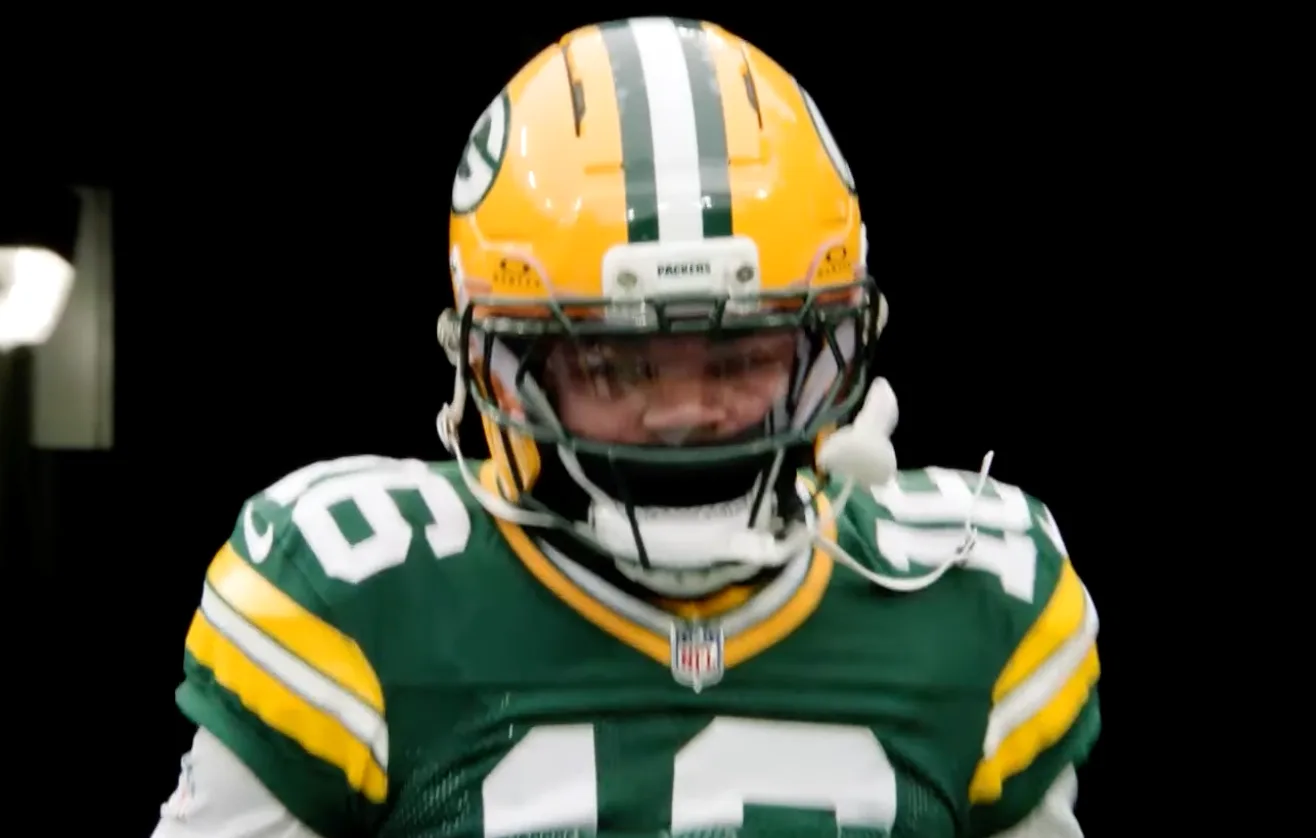
The Green Bay Packers moved Bo Melton back to wide receiver at the first OTA practice of the 2026 offseason, officially ending a cornerback experiment that lasted exactly one season, produced exactly zero defensive snaps in a real game and stands as one of the more unusual roster management decisions in the league’s recent memory.
Melton was spotted working exclusively with the offense on Thursday. The Packers updated his position on their official roster page shortly after practice. The experiment is over.
It lasted one year. The results were these: Melton attended every cornerback meeting, took every cornerback rep in practice, was listed as a cornerback on the official depth chart and never played a single snap in the defensive backfield when a real game started.
He played 96 offensive snaps as a receiver, caught four passes for 107 yards and a touchdown, returned 19 kickoffs for 467 yards and was essentially what he has always been, a receiver and core special teams player who happened to be wearing a different positional label all year.
The Packers tried something. It did not work in the way they intended. They moved on. That is the whole story, and it is genuinely funny in the specific way that NFL roster management stories sometimes are.
Why They Tried It In The First Place
The Bo Melton cornerback experiment had a specific and reasonable logic when it was conceived. In the 2025 offseason, the Packers had two problems simultaneously.
Problem one: Too many wide receivers. Jayden Reed, Christian Watson, Romeo Doubs, Matthew Golden, Dontayvion Wicks and Melton himself were all competing for spots in a receiver room that could carry five, maybe six players on the 53-man roster.
Melton, a seventh-round pick out of Rutgers who had scratched and clawed his way onto the active roster through special teams excellence, was the most vulnerable of the group. If all six receivers were going to be kept, fine.
If five were kept, Melton was most likely to be the one who did not make it.
Problem two, Not enough cornerbacks. The Packers released Jaire Alexander, the two-time Pro Bowl cornerback who had been the anchor of their secondary, in the offseason after contract disputes and a suspension for conduct detrimental to the team.
Micah Robinson and Kalen King were both out to open minicamp. The cornerback room was thin.
The solution someone arrived at was, what if the player with the smallest chance of making the WR roster trained at the position where the team has the biggest need? Bo Melton was fast.
He had good instincts in coverage on special teams. He was willing. The idea was that if he could develop into a legitimate CB option, he might make the roster that way even if the WR competition crowded him out.
It made a certain kind of sense on paper. The NFL is filled with experiments that make a certain kind of sense on paper.
What Happened To Melton?
What happened is that Melton spent the entire 2025 season attending cornerback meetings and practicing with the defensive backs and never played a defensive snap when games started.
Not because he was injured. Not because the coaches decided not to use him. The Packers cornerback room suffered injuries, as all NFL secondary groups do, and even in those moments, the team never turned to Melton. They found other solutions.
Melton remained on the field for kickoffs, punts and the occasional offensive series, being exactly what he had been the year before except with a different room on the depth chart.
The specific number is remarkable. Melton likely wouldn’t make the 53 as a defensive player, and the 2025 season proved it, he played 96 offensive snaps, caught four passes for 107 yards and a touchdown, and contributed on special teams while the cornerback experiment produced nothing in terms of actual defensive deployment.
The Packers got what they needed from him — a versatile roster piece who helps on special teams and can contribute offensively when called upon, without ever actually using him in the role the experiment was supposedly designed to develop.
Which makes you wonder how much of the experiment was genuine development investment and how much of it was a paperwork solution to a roster construction puzzle.
Why Moving Back Makes Complete Sense Now
The 2026 offseason has reshuffled the specific roster circumstances that made the cornerback experiment seem like a solution.
On the receiver side, the logjam that threatened Melton’s roster spot has cleared significantly. Romeo Doubs, one of Jordan Love’s favorite targets, left in free agency. Dontayvion Wicks was traded. Two of the six receivers who were clogging the room are gone.
The Packers did not draft a wide receiver in the 2026 draft. The WR room that returns has Jayden Reed, Christian Watson, Matthew Golden, Savion Williams and Skyy Moore, five receivers with Melton as a sixth. That is a competition he can win.
On the cornerback side, the depth crisis that created the experiment has been addressed through conventional roster building. The Packers signed Benjamin St-Juste in free agency.
They drafted Brandon Cisse in the second round, a meaningful Day 2 investment at the position. They added Domani Jackson on Day 3. The secondary depth that existed as a problem one year ago exists as a solved problem now.
The equation that made putting a receiver at cornerback seem logical has been replaced by an equation in which the receiver room needs bodies and the cornerback room has them.
The first OTA practice confirmed what the roster math already suggested: Melton is a wide receiver again.
Who Is Bo Melton?
The specific case for Melton as a legitimate WR6 and core special teams contributor is built on a career that has shown consistent value in the limited opportunities he has received.
He was drafted by the Seahawks in the seventh round of the 2022 NFL Draft out of Rutgers, the 229th overall pick, one spot after the Packers selected a different player in the same round.
He did not make Seattle’s final 53, landed on their practice squad, and was picked up by Green Bay on December 27, 2022. He has spent four seasons with the Packers scratching out opportunities wherever they exist.
His most memorable moment came in December 2023, when he put together the first 100-plus yard receiving game by a Packer late in the season against the Minnesota Vikings, a performance that came out of nowhere and that gave Packers fans a genuine reason to believe there was an actual receiver in there, not just a special teams body wearing a receiver jersey.
Across four years in Green Bay, he has 28 receptions for 416 yards and two touchdowns in 486 total offensive snaps and 339 special teams snaps across 38 games. The numbers are modest.
The context is that he has almost never been the fifth receiver on a healthy roster. He has been the sixth or seventh guy, activated when injuries create openings, productive when given opportunities and reliable when asked to do the specific things special teams requires, which is to run at full speed toward things in a way that other people are trying to stop him from doing.
With Doubs and Wicks gone, Melton has more opportunity available to him in 2026 than he has had at any point in his Green Bay career. The cornerback experiment is over.
Training camp starts in July. He will be competing for a roster spot at the position he has always actually played.