

A purported note that Jeffrey Epstein’s former cellmate claimed to have found following Epstein’s first suspected suicide attempt in July 2019 was made public on Wednesday May 6, 2026, unsealed by a federal judge nearly seven years after the incident it describes.
The document had been locked in a courthouse vault for nearly five years as part of an unrelated legal dispute before The New York Times petitioned the court last week to release it.
U.S. District Judge Kenneth Karas in White Plains, New York, ordered the note’s release. Federal prosecutors did not oppose the request.
The Department of Justice told the judge in a letter on Monday that it had “no knowledge as to the accuracy of the factual narrative” and deferred to the court’s judgment, a statement that underscores the document’s contested status.
The note is unverified and undated. It is not signed. It reads in part:
“They investigated me for month — found NOTHING!!!” It also contains the line: “It is a treat to be able to chose ones time to say goodbye.”
Who Is Nicholas Tartaglione?
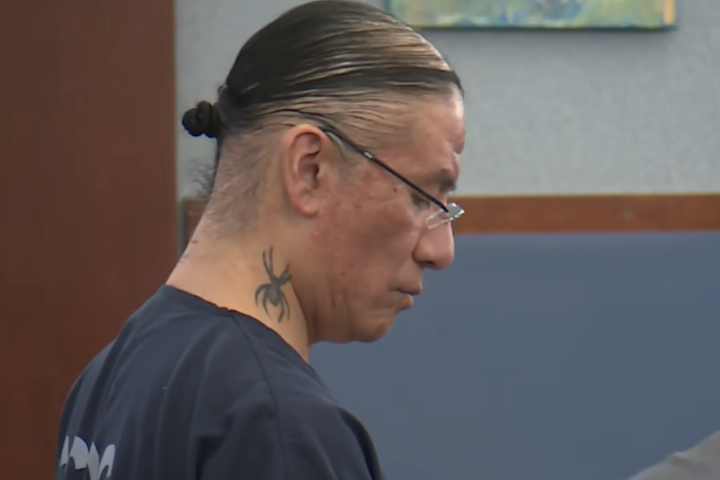
The note became known to the public only last year, when Nicholas Tartaglione, Epstein’s former cellmate at the Metropolitan Correctional Center in Manhattan, described it during an appearance on writer Jessica Reed Kraus’s podcast.
Few people had known about the note’s existence before that conversation.
Tartaglione is a former police officer who served in the Hudson River Valley village of Briarcliff Manor, New York.
He is serving a life sentence after being convicted in 2023 of killing four men, including a man he allegedly tortured and strangled over stolen drug money.
At the time he shared a cell with Epstein in July 2019, he was awaiting trial on those charges while Epstein was awaiting trial on federal sex trafficking charges.
The two men shared a cell for approximately two weeks, beginning shortly after Epstein’s arrest on July 6, 2019. Their time together ended with the suspected suicide attempt on July 23.
On the podcast, Tartaglione described what he says happened that morning. “Jeffrey Epstein tried killing himself when he was in the cell with me,” he said. “I woke up, I brought him back with CPR.”
He said that when he returned to the cell after the incident, he opened the book he had been reading and found the note tucked inside its pages. “It was in my book, yeah, when I got back into the cell, I opened my book to read, and there it was. And he wrote it and stuck it in the book.”
Tartaglione claimed his lawyers had the note examined by handwriting experts who authenticated it as Epstein’s writing. The Times included those statements in its petition to the judge arguing that the note should be made public.
The July 23 Incident
On the morning of July 23, 2019, Tartaglione says he woke up and found Epstein on the floor of their cell with a strip of bedsheet around his neck.
His initial reaction, he told the podcast, was that Epstein appeared to be having a heart attack, his eyes were open and he appeared to be snoring. Tartaglione said he performed CPR and revived him.
Epstein’s own account of the incident, provided to investigators, differed from what a conspiracy theory might expect.
Epstein said he had never had any problems with Tartaglione, that he had not been threatened by him, and that he did not “want to make up something that isn’t there.”
Both men told investigators they kept their conversations to a minimum during the two weeks they shared the cell.
The July 23 incident triggered a review of Epstein’s housing conditions at the Metropolitan Correctional Center.
He was placed on suicide watch for several days before being removed from it, a decision that subsequent investigations would scrutinize heavily.
The August 10th Death
Epstein was without a cellmate on the morning of August 10, 2019, when he was found dead at the Metropolitan Correctional Center. A medical examiner ruled his death a suicide.
He had been removed from suicide watch weeks earlier despite the July 23 incident, and investigators subsequently identified a series of failures by jail personnel in the hours before his death, guards were found to have been browsing the internet and sleeping during periods when they were required to be checking on inmates in Epstein’s housing unit.
At the time of his August 10 death, officials said a handwritten note was found in his cell.
They characterized it not as a suicide note but as a list of grievances about conditions at the jail, complaints about food, showers and the presence of bugs. That note was separate from the one Tartaglione describes finding in July.
Why The Note Was Sealed For Nearly Five Years
The document released Wednesday had been sealed and locked in a courthouse vault since it was submitted as part of the legal proceedings in Tartaglione’s murder case, an unrelated legal matter that happened to involve the man who shared Epstein’s cell.
The sealing was connected to the Tartaglione proceedings rather than to any specific decision to conceal Epstein-related information from the public.
When the Times petitioned the court last week to unseal the note and other related documents, the DOJ’s response was notably noncommittal about the document’s authenticity.
The department wrote to Judge Karas that it recognized “a strong public interest in the circumstances surrounding Epstein’s death” but made clear that it could not vouch for whether the note was genuine, whether the factual account surrounding it was accurate, or what, if anything, it proved about what happened in that cell on July 23, 2019.
The Broader Context Of Epstein Document Releases
The release of this note comes amid a broader effort by the Justice Department to make Epstein-related materials public.
In recent months, the DOJ has released millions of documents in its possession connected to the Epstein investigation and proceedings. Congressional interest in the case has remained active.
Representative Ro Khanna held a roundtable with Epstein survivors and family members tied to the ongoing public accounting of what happened and who knew what.
The note itself does not resolve the core questions that have surrounded Epstein’s case since his death.
Its authenticity has not been officially confirmed. The Justice Department has explicitly stated it cannot verify the account provided in the unsealing petition.
The handwriting experts Tartaglione claims his lawyers hired have not been publicly identified or their findings subjected to independent review.
What The Note Does Not Tell Us
The note is a short document, difficult to read in some sections, as multiple outlets have noted.
What it appears to express, if authentic, is a state of mind consistent with a man who believed he had been investigated exhaustively without evidence of wrongdoing being found, and who was contemplating ending his life.
The phrase “It is a treat to be able to chose ones time to say goodbye” is the most striking line, an expression of something like relief at the prospect of choosing the timing of one’s own death, rather than desperation or panic.
It is a phrase that has generated significant discussion among those who have read it in the context of what they know about Epstein’s circumstances in July 2019.
What the note does not do is resolve the questions about who Epstein was, what he did, who was involved in his criminal network, or what the full scope of accountability looks like.
Those questions are the subject of the ongoing document releases, Congressional attention and survivors’ advocacy.
The note released Wednesday is one document, of contested authenticity, that describes a moment in a cell in July 2019. Nothing more and nothing less has been confirmed about it.