
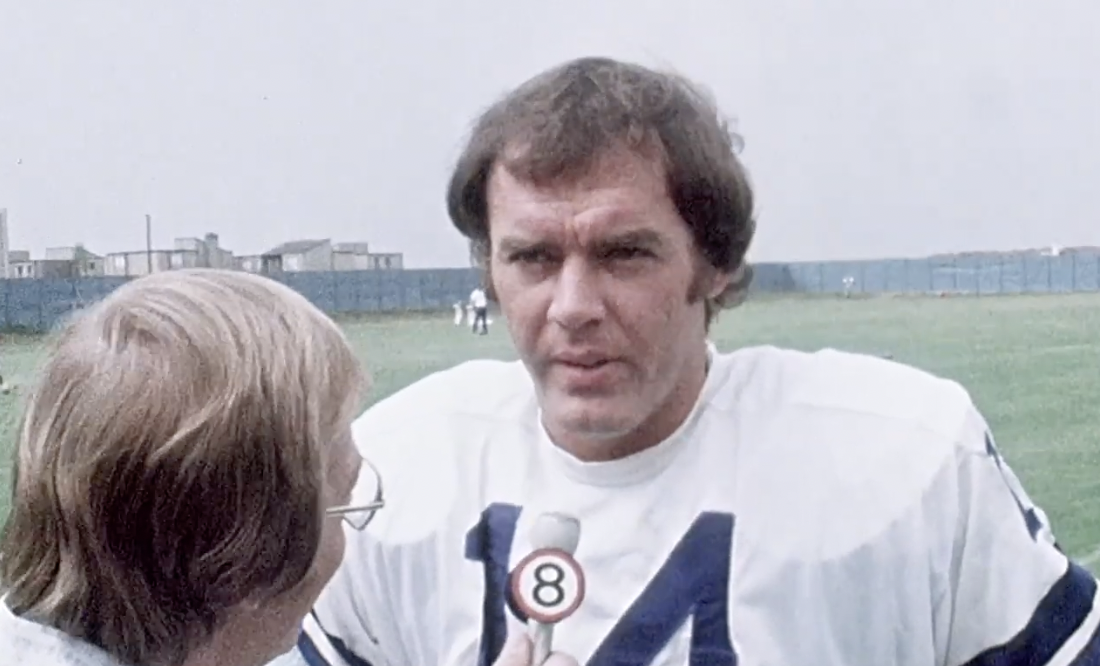
Craig Morton, the quarterback who led the Denver Broncos to their first Super Bowl appearance in franchise history and who spent 18 seasons playing for three of the most storied organizations in professional football, died on Saturday May 9, 2026, at his home in Mill Valley, California.
He was 83 and was surrounded by family. The Denver Broncos confirmed his death through his family on Sunday.
Morton holds one of the most unusual records in the history of the NFL, he is the only quarterback to start the Super Bowl for two different teams, the Dallas Cowboys and the Denver Broncos, and the only one of the four quarterbacks who have ever accomplished that feat to start the first Super Bowl appearance in the history of both franchises.
The other three quarterbacks who started Super Bowls for two different teams were Peyton Manning, Tom Brady and Kurt Warner. All three won at least one of those games. Morton lost both of his.
He survived by his wife Kym, his sister, his children and his grandchildren.
He left behind a record that is specific and unrepeatable, the mark of a quarterback who was good enough to take two different franchises to the biggest game in football, and who did it across an era when reaching the Super Bowl required not just talent but durability, adaptability and the specific ability to make the teams around him believe in what they were doing.
The Quarterback Who Lost His Job In Dallas
Craig Morton was born on February 5, 1943, in Flint, Michigan. He grew up in California, attended the University of California at Berkeley and built one of the most accomplished careers in Pac-8 conference history, setting a conference record with 4,501 passing yards under coach Marv Levy, with a young offensive assistant named Bill Walsh working beside Levy in the Bears’ coaching staff.
The Dallas Cowboys selected him fifth overall in the 1965 NFL Draft. The Oakland Raiders also took him in the 10th round of the AFL Draft, but Morton went to Dallas and joined a Cowboys team coached by Tom Landry that had Don “Dandy” Meredith at quarterback.
Morton backed Meredith up for four seasons, learning the game at the professional level in the shadow of one of the most beloved players in Cowboys history.
When Meredith retired unexpectedly in 1969, the starting job in Dallas opened up, and Morton seized it, completing more than 71 percent of his passes in his first three games as the primary starter before a separated right shoulder interrupted his momentum.
He eventually won the job outright and became the Cowboys’ quarterback for their first Super Bowl appearance.
Super Bowl V, played in January 1971, was one of the most turnover-plagued championship games in the sport’s history and is sometimes called the “Blunder Bowl.”
The Cowboys lost to the Baltimore Colts 16-13. Morton threw for the Cowboys’ first touchdown in a championship game, but the game slipped away in a manner that remains one of the more bittersweet memories in Dallas history. The Cowboys were talented enough to win and did not.
The years that followed were among the most unusual in NFL quarterback history.
Dallas head coach Tom Landry began alternating Morton and the up-and-coming Roger Staubach, at points, even swapping them on a play-by-play basis within the same game.
That arrangement could not last. By 1974, Morton was traded to the New York Giants.
The Struggle In New York
The Giants years were not kind to Morton. He struggled in New York in ways that seemed to indicate a career that had peaked and was winding down toward a quiet end.
The talent that had taken Dallas to a Super Bowl did not translate to the same results in New York.
There was nothing particularly dramatic about his three seasons with the Giants, just a period of professional difficulty that might have defined the end of his career without the phone call that came before the 1977 season.
The Denver Broncos traded for Craig Morton before the 1977 season. He was 34 years old.
He had lost his starting job in Dallas to Roger Staubach, struggled in New York, and was now starting over with a franchise that had never appeared in a playoff game in its entire history.
What followed was one of the most unexpected seasons any 34-year-old quarterback has ever had in professional football.
The Orange Crush Season That Put Denver On The Map
The 1977 Denver Broncos were not expected to do anything remarkable. They had a new head coach in Red Miller.
They had a veteran quarterback most people assumed was winding down. They had a defense that was about to become legendary under a nickname it earned game by game across that season, the Orange Crush.
Morton described it himself in August 2025, in a profile the Denver Gazette published from his home in Mill Valley.
“It was a magical season,” he said. “We weren’t expected to do anything with a new coach and a new quarterback. But we couldn’t lose, and the fans were amazing. You’d go into a restaurant, and they would literally stand up and clap in celebration.”
Denver went 12-2. The Orange Crush defense was the best in the AFC. Morton was named the NFL Comeback Player of the Year and the AFC Offensive Player of the Year.
His 8.5 yards per attempt that season remains a Broncos franchise record to this day. He led the team to playoff victories over the Pittsburgh Steelers and the Oakland Raiders.
The week before the AFC Championship Game against Oakland, Morton was hospitalized with a swollen left hip that needed to be drained. He played anyway.
The Broncos won. Denver was going to the Super Bowl for the first time in franchise history, led by a 34-year-old quarterback who had previously been written off.
Super Bowl XII pitted the Broncos against Morton’s former team, the Dallas Cowboys.
It was the kind of story that makes football feel almost literary in its construction. The quarterback who had started Dallas’s first Super Bowl was now starting Denver’s first Super Bowl, against Dallas.
It did not go well. Morton threw for 39 yards and four interceptions before being pulled in favor of backup Norris Weese in a 27-10 loss.
It was the first of what would become four consecutive Super Bowl losses for the Broncos franchise, a stretch that would not end until John Elway arrived and eventually won two championships in the late 1990s.
The Second Act That Produced Career Bests
The Super Bowl XII loss did not end Morton’s value to the Broncos or his productivity as a quarterback. He continued in Denver for five more seasons, eventually working under head coach Dan Reeves, his former Cowboys teammate.
In 1981, at age 38, Morton threw for 3,195 passing yards and 21 touchdowns, both career highs. He was still the starter, still producing at an elite level for his age, in his second-to-last season.
He finished his career with 27,908 passing yards, 183 touchdowns and 187 interceptions across 18 NFL seasons.
His career record as a starter was 81-62-1. When he retired after the strike-shortened 1982 season, three games into what would have been his 19th year, he ranked in the top 20 all-time in both passing yards and touchdown passes.
He retired just before John Elway arrived in Denver for the 1983 season. Elway wore the same number Morton had worn, number 7, and Denver eventually retired that number in Elway’s honor. Morton had worn it first.
The Broncos inducted him into their Ring of Fame in 1988. He was also inducted into the Colorado Sports Hall of Fame, the College Football Hall of Fame, the Cal Athletic Hall of Fame and the San Jose Sports Hall of Fame.
In 2024, he attended the Orange Crush reunion at Empower Field in Denver, one last gathering with the teammates from the magical season that put Denver on the map.
The New York Giants, the second of his three NFL teams, offered condolences Sunday. “We are saddened to hear of Craig’s passing. He was a great leader and teammate. Our thoughts are with his family and friends.”
Craig Morton was 83 years old. He started two Super Bowls for two franchises that had never been there before. He did not win either one.
He is the only quarterback in NFL history who can say he did what he did, exactly the way he did it, for the teams he did it for.