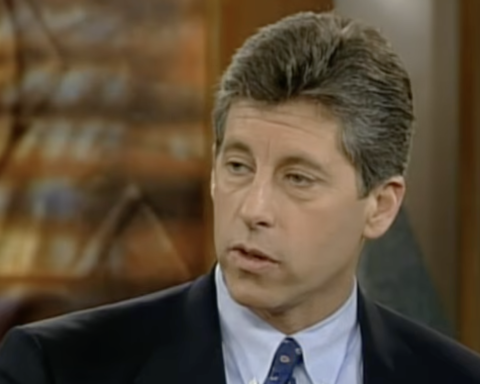

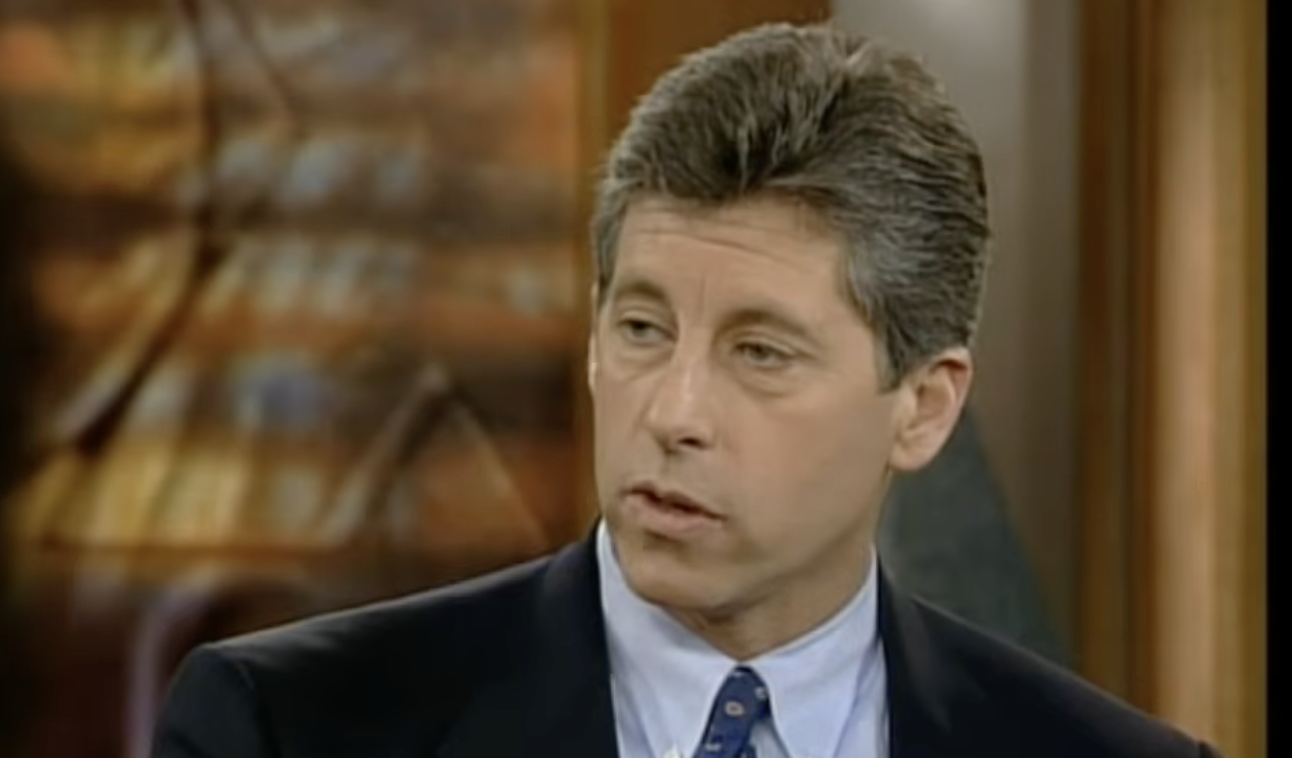
Mark Fuhrman, the former Los Angeles Police Department detective who became one of the most consequential and controversial figures in one of the most watched criminal trials in American history, died on May 12, 2026 in Idaho. He was 74.
The Kootenai County Coroner’s Office confirmed the death. A source told Rolling Stone he had been battling cancer, though the county does not officially release cause of death as a matter of policy.
Fuhrman was one of the first two detectives dispatched to investigate the June 1994 murders of Nicole Brown Simpson and Ron Goldman at her Brentwood home. He was 42 years old at the time.
He reported finding a bloody glove at OJ Simpson’s Rockingham estate that became one of the most discussed pieces of evidence in the subsequent criminal trial, the piece of physical evidence that connected Simpson to the crime scene and that the defense team worked systematically to discredit.
That work of discrediting, and the specific tool the defense found to accomplish it, is why Fuhrman’s name has remained in the American cultural memory for three decades and why it is trending today.
The Early Life That Preceded His Fame
Mark Fuhrman was born on February 5, 1952, in Eatonville, Washington. His father left the family when he was seven years old, and he frequently cared for his younger brother while his mother worked.
He attended Peninsula High School before enlisting in the United States Marine Corps in 1970. He served five years and achieved the rank of Sergeant before leaving the military in 1975 and enrolling in the Los Angeles Police Academy.
He graduated from the academy in 1975 and joined the LAPD as a patrol officer. He worked in that capacity until 1989, when his performance earned him a promotion to detective, a position he held until 1995, giving him twenty years of total service with the department.
He was, by the accounts of the people who worked alongside him, a capable and aggressive investigator.
His former partner Roberto Alaniz told Rolling Stone on Monday that he believes Fuhrman was unfairly branded by the events of the Simpson trial and that the man he worked beside was not the figure the public came to know.
He had a prior connection to Simpson. In 1985, Fuhrman responded to a call involving a domestic incident at Simpson’s home, years before the murders, years before the trial that would define both of their public lives permanently.
The Glove And The Trial
On the night of June 12-13, 1994, Nicole Brown Simpson and Ron Goldman were found stabbed to death outside her Brentwood condominium. Simpson was her ex-husband.
Fuhrman and his partner were among the first investigators on the scene and then proceeded to Simpson’s Rockingham estate.
At Rockingham, Fuhrman reported discovering a bloody glove, a left-handed glove that appeared to match a right-handed glove found at the murder scene.
That discovery was the beginning of the physical evidence chain that prosecutors built their case around.
The trial that followed was unlike anything American television had broadcast before it.
The murder of a famous athlete’s ex-wife, the arrest of the athlete himself, the prosecution of a man whose public image had been built on an entire career of likability, all of it broadcast live, every day, for nine months. Fuhrman testified as one of the prosecution’s key witnesses. His testimony about finding the glove was central to the state’s case.
The defense, assembled under lead attorney Johnnie Cochran and including F. Lee Bailey, Alan Dershowitz, Barry Scheck and others in the group the press called the Dream Team, had a specific strategy for Fuhrman. They believed he had planted the glove.
They believed the investigation was compromised by racial bias.
They had obtained recordings made by a screenwriter named Laura McKinny who had interviewed Fuhrman extensively as research for a screenplay she was developing about the LAPD.
On the recordings, Fuhrman used the n-word repeatedly, 41 times, by some accounts, in conversations recorded over multiple years. The recordings directly contradicted his testimony under cross-examination, in which he stated that he had not used that word in the previous decade.
F. Lee Bailey led the cross-examination of Fuhrman. It became one of the most discussed courtroom exchanges in legal history.
Fuhrman subsequently declined to answer further questions, invoking his Fifth Amendment right against self-incrimination, a moment that, in front of a watching nation, communicated to jurors and viewers exactly what it was designed to communicate.
The Perjury Conviction
Fuhrman left the LAPD in 1995 following Simpson’s acquittal in October of that year.
In 1996, he pleaded no contest to a felony perjury charge related to his trial testimony. He was sentenced to three years of probation. The felony conviction ended his law enforcement career permanently.
Alan Dershowitz, one of the defense attorneys who had used the Fuhrman recordings to undermine the prosecution’s case, reflected on Monday about the man he had worked against in one of the most high-profile cases in American legal history. “He’s very smart, and you know, a very, very aggressive detective,” Dershowitz said.
“Ultimately his actions helped us win the O.J. case because of his use of the ‘n’ word.” He added: “I got to know him later, after it was all over, and we had a cordial relationship.” He described Fuhrman as “a much better detective than he was a witness.”
Kato Kaelin, the friend of Nicole Brown who had testified at the trial and whose name became part of the cultural vocabulary of the 1990s through his association with the case, acknowledged Fuhrman’s death on X, saying he wanted to “respectfully” mark the occasion.
The Career After The Trial
Fuhrman moved to Sandpoint, Idaho after leaving the LAPD, a geographic and professional relocation that put physical and career distance between himself and the city where his name had become a fixture in a conversation he could not escape.
He built a second career as a writer, a radio commentator and a television contributor.
His 1997 book “Murder in Brentwood” was a New York Times bestseller, his account of the Simpson investigation and trial, built around his insider perspective on a case that had defined his life.
He went on to write books about other high-profile murder cases, working the same forensic investigative perspective that had been both his professional strength and, in the Simpson case, his undoing.
He served as a forensic and crime scene expert for Fox News, appearing regularly as a commentator on major criminal cases in the years following his conviction.
The arc of his post-trial life was the specific kind of American second act that a perjury conviction does not typically enable but that determination, notoriety and a genuine body of investigative knowledge can occasionally produce. He wrote. He broadcast.
He commented on cases. He lived in Idaho.
The Lasting Impact Of the OJ Simpson Trial
The O.J. Simpson murder trial ran from January 1995 through the verdict on October 3, 1995, nine months of daily live television that exposed divisions in American life that had been present for decades but that had rarely been made visible in real time on this scale.
The racial dimensions of the trial, the Black defendant, the overwhelmingly Black jury, the mostly white victims, the allegations of police misconduct and racial bias in the LAPD, played out in a courtroom that was effectively a national stage.
Fuhrman was not simply a supporting character in that drama. His presence, the recordings, the perjury and the defense’s argument that he had planted evidence to frame a Black man became the symbolic center of the racial argument that the defense made to the jury.
Whether that argument was accurate about what Fuhrman did with the glove, whether he found it where he said he found it or placed it there, was never definitively resolved. Simpson was acquitted of the murders.
A subsequent civil trial found him liable for the deaths. He died in 2024 in Las Vegas at the age of 76.
Mark Fuhrman outlived O.J. Simpson by two years.
He died in Idaho at 74, having spent three decades navigating the aftermath of the nine months in 1994 and 1995 when his name became inseparable from the American conversation about race, justice, police credibility and the limits of what a courtroom can actually determine about the truth.