New Monkey Species Named Likweli Discovered Hiding In The Congo Rainforest
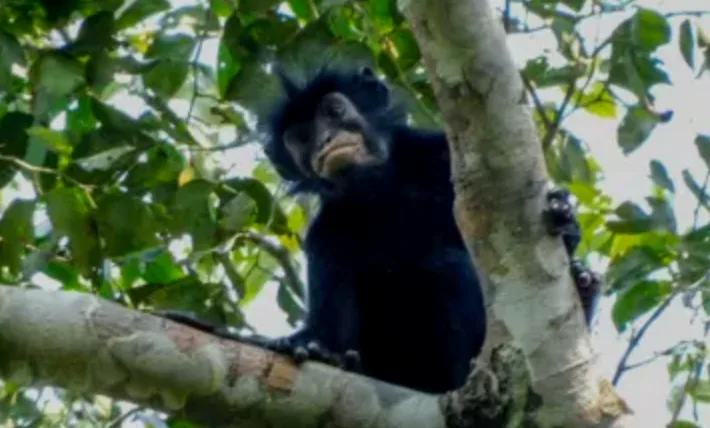
Scientists have formally described a new species of colobus monkey from the forests of the Democratic Republic of Congo, making it only the fifth new monkey species identified in Africa in the past 75 years.
The paper was published Wednesday in the journal PLOS ONE. The monkey's scientific name is Colobus congoensis.
Its common name is Likweli, which is what local communities in the Lomami National Park region have always called it.
The story of how science caught up to what local people already knew began in 2008, when conservationists photographed an unidentified primate in the dense forests between the Lomami and Lilo rivers.
The image was blurry but clearly showed something unusual. A second sighting came in 2018. Researchers then launched a systematic mission, making 114 sightings over a 1,700-square-kilometer area across four years.
What they found was a monkey that had apparently been hiding in plain sight, from science, if not from the local communities, for millions of years.
Likweli is mostly black with long, silky, light-reflecting fur. Its most distinctive feature is a conspicuous orange patch around the mouth and bare gray skin on the cheekbones, framing dark eyes that create a mask-like appearance.
It is smaller than related colobus species, weighing around 15 pounds, and has a distinctive deep roaring vocalization unlike any other colobus. Genetically, its closest relative is Colobus satanas, a monkey found more than 1,200 kilometers away.
The two species diverged approximately four to five million years ago, one of the oldest known evolutionary splits in the entire colobus lineage.
Researchers from Florida Atlantic University and the City University of New York Graduate Center are recommending Likweli be classified as Endangered on the IUCN Red List given its restricted range, small population and pressure from hunting and habitat loss.