Grey Whales Are In A Catastrophic Population Collapse
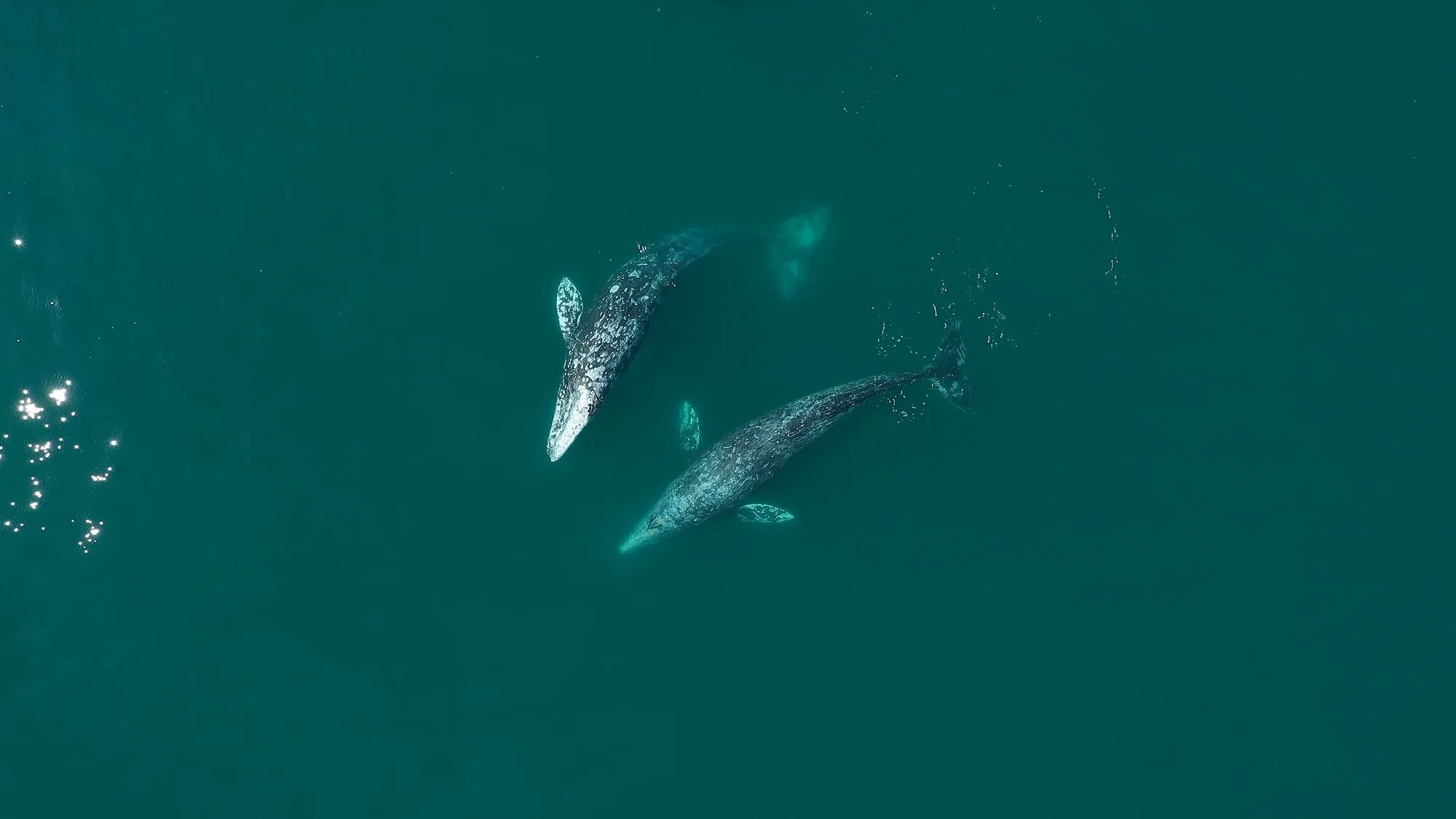
Researchers have declared a catastrophic mortality event for Pacific gray whales after 145 dead animals were found stranded on West Coast beaches so far this year, already well above the historical annual average of 43 strandings between 2006 and 2023, and on pace to rival or exceed 2025's record of 179.
Scientists say the die-off is part of a collapse that has been building for seven years and is driven directly by rising temperatures.
The eastern North Pacific gray whale population has dropped from approximately 27,000 animals in 2016 to around 13,000 today, roughly half in less than a decade.
More alarming still, the annual calf count has fallen from 1,600 to approximately 85. A 95 percent reduction in births.
A population declining faster than it can reproduce.
The mechanism is the Arctic. Gray whales make one of the longest migrations of any mammal, up to 14,000 miles round trip between Baja California breeding lagoons and Arctic feeding grounds, where they spend summers gorging on tiny crustaceans that live in seafloor sediment.
As Arctic sea ice shrinks, the algae that feeds those crustaceans has less surface to grow on, drops to the seafloor in smaller quantities and the entire food chain compresses.
The whales are arriving at the Arctic underweight and leaving more underweight. Many do not survive the return journey. Many of those that do are too malnourished to reproduce.
"The population is in serious trouble, and this is not part of a normal cycle," said John Calambokidis of the Cascadia Research Collective, who has studied gray whales for 40 years.
Scientists have petitioned NOAA to relist gray whales under the Endangered Species Act, they were removed in 1994 after a successful recovery from near-extinction.
The petition was filed in August 2025. A decision is now nearly a year overdue.