Sonny Rollins, Saxophone Colossus And Last Giant Of The Bebop Era, Has Died At 95
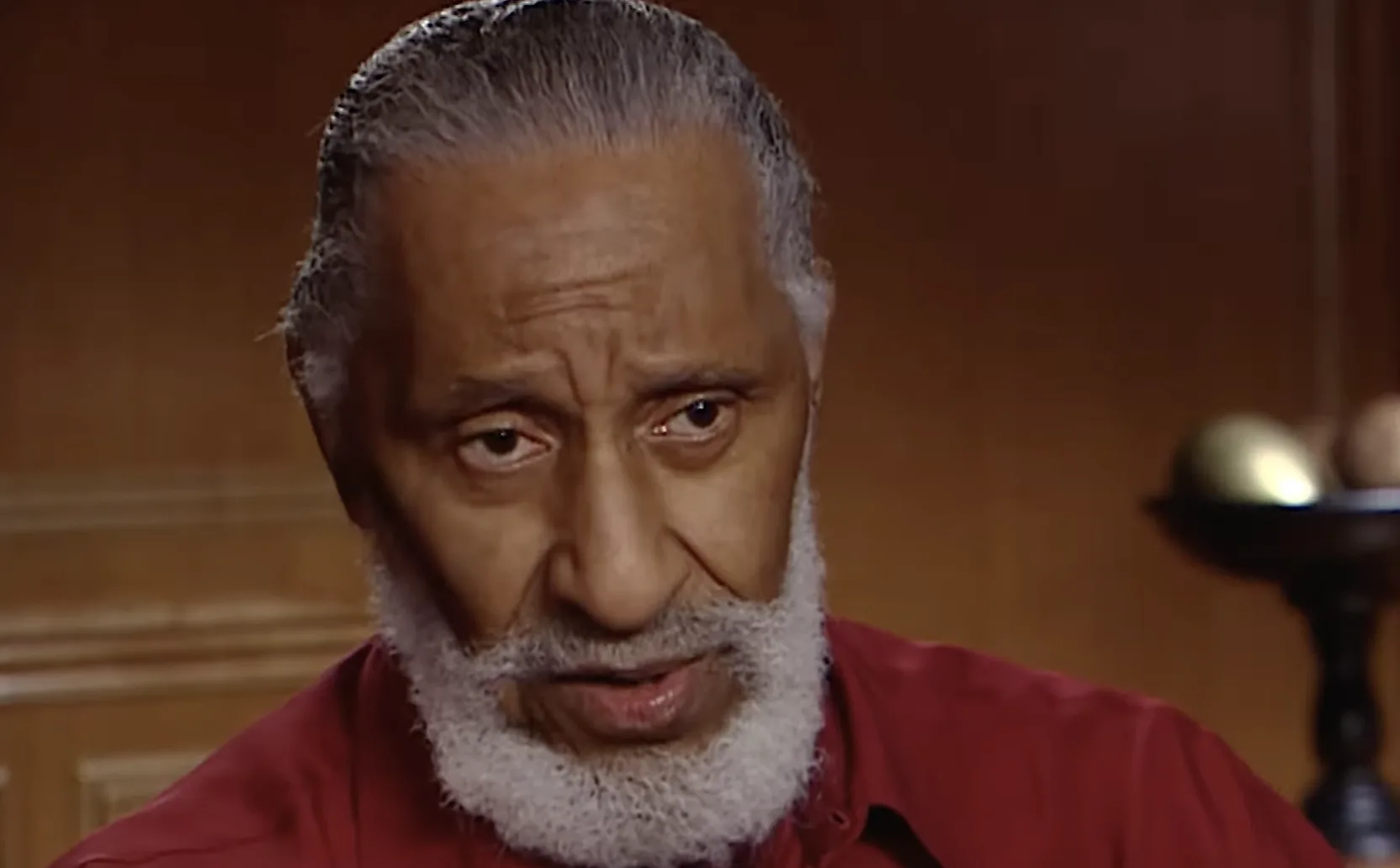
Sonny Rollins, the man who called himself “a work in progress” until the end of a life that lasted 95 years, who played the saxophone on the Williamsburg Bridge alone at 3 in the morning because the boats and the subway and the cars made enough noise to drown him out, who played on a Rolling Stones album and in jazz clubs and at Carnegie Hall and who always believed he had more to learn, died on Monday May 25, 2026 at his home in Woodstock, New York.
His spokesperson Terri Hinte confirmed the news to the Associated Press. The statement his estate released was warm and specific. “It is with deep sorrow and profound love that we announce the passing of Sonny Rollins. The Saxophone Colossus died May 25, 2026, at his home in Woodstock, NY, at the age of 95.”
The statement included a quote he gave in 2009 that reads, in retrospect, as a kind of coda he had been composing for years:
“I think when the creative person ends, he continues in the next existence. I’m a person who believes this life isn’t the be-all and end-all of everything. A spiritual person doesn’t feel like that.”
He was one of the last living connections to the bebop era, the revolutionary movement of the 1940s in which Charlie Parker, Dizzy Gillespie, Thelonious Monk and the musicians around them rewrote what jazz could be.
Alongside John Coltrane and Charlie Parker, Rollins was one of the three most influential saxophonists in the music’s history.
He had been largely housebound for the past couple of years because of various physical problems.
Pulmonary fibrosis, a thickening and scarring of the lungs, had forced him out of performing more than a decade earlier. He played his last concert in 2012 and stopped playing altogether in 2014.
The Boy From Harlem Who Became The Saxophone Colossus
Walter Theodore Rollins was born on September 7, 1930 in Harlem, New York City, specifically in the Sugar Hill neighborhood, the elevated section of Harlem that housed many of the Black middle class and professional community who shaped the cultural life of the city in the first half of the 20th century.
He grew up as a neighbor of the family of Thelonious Monk, the pianist and composer who would become one of the most significant figures in jazz history. The proximity was not incidental.
Rollins grew up in a neighborhood where jazz was not distant, famous music but the immediate sound of the life being lived around him.
He began playing professionally as a teenager and recorded for the first time in 1949, at 18, playing on a session with vocalist Babs Gonzales.
By the early 1950s he was playing alongside Miles Davis, Thelonious Monk and Bud Powell, the central figures of the bebop movement, and by the middle of the decade he had established himself as a major voice in his own right. He recorded more than 20 albums between 1953 and 1959.
He wrote jazz standards that are still played in every jazz club in the world, “St. Thomas,” with its calypso-influenced melody; “Doxy”; “Oleo,” compositions that entered the music’s permanent vocabulary while their author was still in his twenties.
The 1956 album Saxophone Colossus gave him his nickname, the one that would outlast every other description applied to him.
The title was meant as praise and it became legacy. The nickname required a specific physical dimension to land the way it did.
Rollins was a large man with a large sound, a tenor saxophone tone that projected into rooms with a density and warmth that players spend careers trying to develop and that he appeared to have been born with. The colossus was not just an honorific.
It described something real about the way sound filled a space when he was the one producing it.
The Bridge That Defined A Career And A Legend
In 1959, at 28 years old, at the height of his commercial and critical success, Sonny Rollins withdrew.
He did not retire. He did not go on vacation. He stopped performing in public and stopped recording, and he went alone to the Williamsburg Bridge, the suspension bridge spanning the East River between the Lower East Side of Manhattan and Williamsburg, Brooklyn, a bridge with a pedestrian walkway that hangs over the river between the car lanes and the subway tracks. He went there at night, when the foot traffic was minimal, and he played his saxophone for himself on the walkway above the water.
He described the discovery of the bridge in terms that made it sound inevitable. “One day, I was on Delancey Street, and I walked up the steps to the Williamsburg Bridge and came to this big expanse. There was nobody up there. So, I started walking across the bridge and said, ‘Wow. This is what I have been looking for. This is a private place. I can blow my horn as loud as I want. Because the boats are coming under, and the subway is coming across, and cars, and I knew it was perfect, just serendipity.”
He went up to 16 hours a day. The boats went past below. The subway went past beside him. He played.
“I was so close to the sky,” he said later. “It was spiritual.”
What was he doing? He was dissatisfied with his own playing, not because it was poor but because it was already remarkable, and remarkable was not enough. He could hear the gap between what he was doing and what he believed music could be, and he went to a bridge above the East River to close it.
The discipline of the practice and the isolation of the location were both intentional.
He needed to hear himself without the context of performance or audience or recording, just the horn and the sound it made and the vast indifferent noise of the city around it.
He returned from the bridge in 1962 with an album called The Bridge. It was received as a cultural event, not just a new record but a return that the jazz world had been waiting for and that vindicated every hour he had spent on that walkway.
He took a second sabbatical in 1969, traveling to India to study at an ashram, and returned in 1971 with a Guggenheim Fellowship in composition.
He would continue recording and touring into his 80s, because the desire to play, to work, as he always said, toward something better, never left him.
The Rolling Stones And The Wider World
Jazz has a history of remaining invisible to audiences that have never been explicitly invited in, and Rollins had spent his career largely inside the jazz world’s specific gravity. The Rolling Stones changed that in 1981.
The 1981 album Tattoo You included a ballad called “Waiting on a Friend,” a slow, unhurried song that needed something its existing recording did not have.
Mick Jagger brought in Rollins to provide a saxophone part. Rollins devised his approach by watching Jagger dance and building the solo around the movement he observed, the specific improvisational logic of responding to what a performer’s body was communicating rather than to what a chord chart described.
The solo he produced is one of the most recognizable saxophone moments in the history of rock and roll, floating over the song with the ease of someone to whom music is as natural as breathing.
The Tattoo You moment introduced Rollins to an audience that might otherwise never have encountered his work.
It also illustrated something essential about him, that he was not an elitist or a purist, not a guardian of jazz’s borders against the intrusion of other music, but a musician who was interested in sound and expression wherever they appeared and who was willing to play a Rolling Stones ballad for the same reason he was willing to play a calypso standard or a Broadway show tune or a pop melody, because the music was there to be played.
What He Leaves Behind
Rollins recorded more than 60 albums as a leader across a career that ran from 1947 to 2014. He was a National Endowment for the Arts Jazz Master. He received the Kennedy Center Honor.
President Obama awarded him the National Medal of Arts in 2010. Sweden gave him the Polar Music Prize.
Austria gave him its Cross of Honor for Science and Art.
He was photographed in the iconic 1958 image known as “Great Day in Harlem,” the photograph of 57 jazz musicians gathered outside a Harlem brownstone that became one of the defining images of the music’s golden era.
He married Lucille Pearson, who managed his career and his life with a devotion that he described as essential to everything he achieved, and who preceded him in death after 39 years of marriage.
He always found listening to his old recordings “excruciating,” the flaws he could hear in performances that everyone else considered masterworks.
He always called himself a work in progress. He told the AP in 2007 that he didn’t consider himself a musician who had learned as much as he wanted to learn.
The man who played alone on the Williamsburg Bridge at 3 in the morning because the boats and the subway were loud enough to not care about the sound he was making is gone at 95.
The recordings are what remains. They are, by the standards of any measure anyone has ever applied to jazz, extraordinary.