
Acapulco Restaurant and Cantina, the Mexican dining chain that opened in Pasadena, California, in 1960 and grew to 39 locations across the state, is down to its final two restaurants, and the story of how it got here is one of the more painful slow-motion losses in California casual dining history.
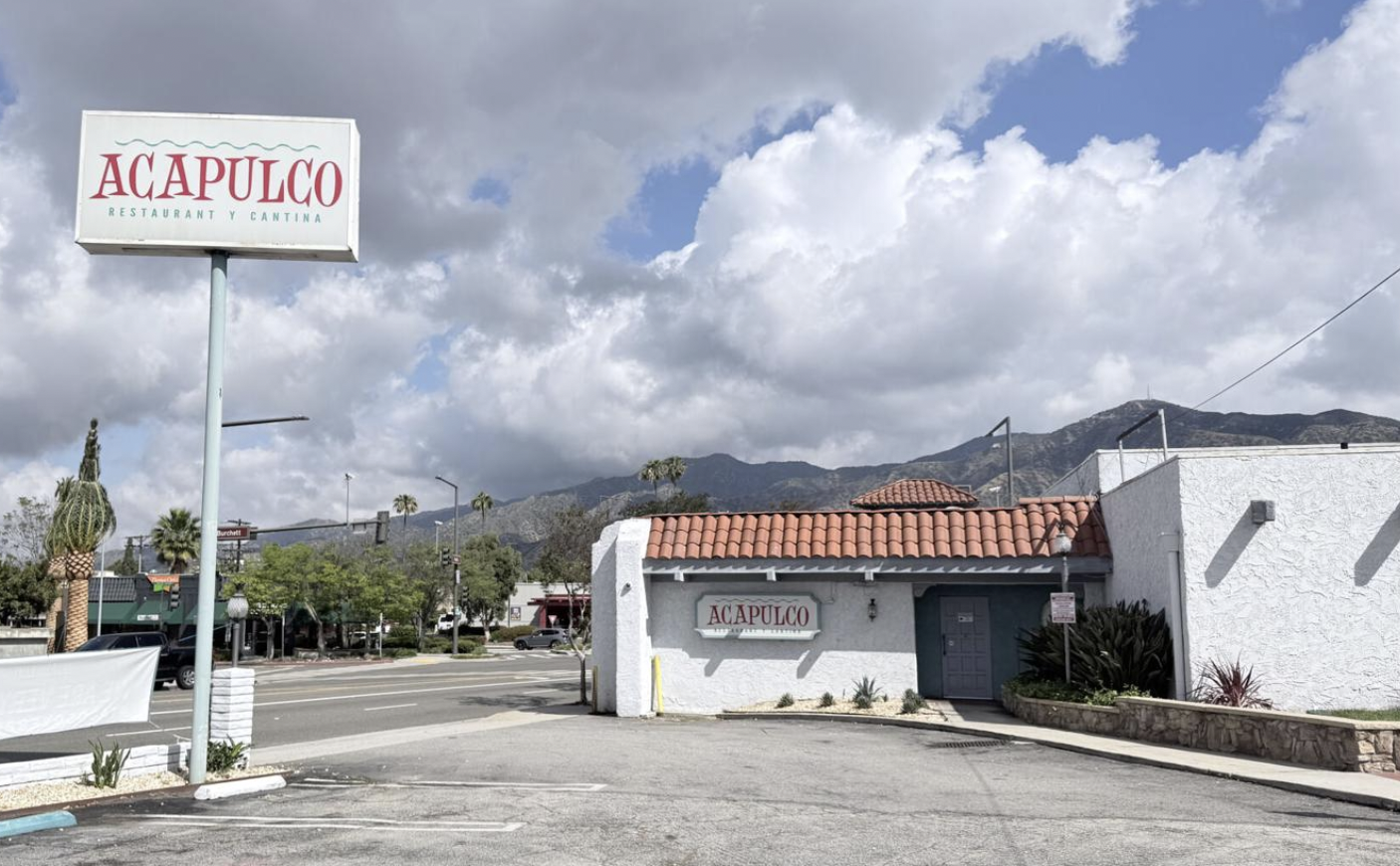
The Glendale location at 722 Pacific Ave., which had been serving the community for 57 years, announced it was closing on Mother’s Day, May 10, 2026.
The community responded with such intensity that the restaurant reversed course.
“Because of you, our company has decided to fight to stay open,” Acapulco posted on social media after the flood of responses arrived. “We will remain open until further notice. This isn’t a promotion or a tactic.”
Employees told KTLA the restaurant plans to remain open for approximately two more months beyond the original May 10 date, though a final closing date has not been officially announced.
The building itself is still eventually going to be demolished, the City of Glendale’s Director of Community Development conditionally approved a 2-story car wash for the property. The stay of execution is real.
The end is still coming. A parking lot where generations of Southern California families celebrated birthdays, anniversaries and ordinary Tuesday dinners will become a place where you get your car washed.
The chain’s final surviving location sits at 6270 Pacific Coast Highway in Long Beach. When the Glendale location closes, 38 of 39 Acapulco restaurants will have shut their doors.
The 66-Year History And How The Decline Happened
Acapulco Restaurant and Cantina opened its first location in Pasadena in 1960, the same year Chubby Checker released The Twist, the same year JFK was elected president, the same year California’s population first cracked 15 million.
The chain built itself around the specific version of Mexican American cuisine that Southern California families in the mid-century had come to associate with celebration.
Margaritas in salted-rim glasses, fajitas arriving on sizzling cast iron platters, chips and salsa on the table before anyone had ordered anything, and a dining room designed to feel like a festive escape from whatever was happening outside.
It worked for decades. At its peak, Acapulco operated 39 locations across California, a presence in every major Southern California market, enough to be the default answer when someone in the San Gabriel Valley or the South Bay asked where to go for a birthday dinner.
The chain came under the umbrella of Real Mex Restaurants Inc., a California-based operator that ran multiple Mexican dining chains.
Then the Great Recession arrived in 2008. Real Mex filed for Chapter 11 bankruptcy in October 2011.
The contraction that had been building since 2008 accelerated through the bankruptcy proceedings and the years that followed. In the summer of 2016, Real Mex closed 30 locations across all of its brands as it continued to restructure.
Acapulco locations in Azusa, Burbank, Costa Mesa, Diamond Bar, Downey, East Hollywood, Fresno, Pasadena, Santa Clara and Santa Fe Springs were among those that closed across the various rounds of cuts.
Real Mex filed for bankruptcy a second time in August 2018. Z Capital Group acquired the company’s assets out of that second bankruptcy and rebranded as Xperience Restaurant Group in October 2018.
The new name did not reverse the attrition. Xperience currently operates 11 restaurant brands totaling 66 units, including 24 El Torito locations, 23 Chevy’s units and five Sol Mexican Cocina restaurants. Acapulco, which was once the crown jewel of the portfolio, is down to two locations and counting toward one.
What Has The Community Response Been?
The social media response to the Glendale closure announcement tells the full emotional story of what Acapulco meant to the people who grew up with it.
The restaurant’s own Instagram farewell before the announced Mother’s Day closure captured it first:
“This place has been more than just a restaurant, it’s been home to so many memories, celebrations, and friendships. To our amazing regulars, thank you for your loyalty, your smiles, and for growing with us throughout the years. You truly made this place special. From the bottom of our hearts, thank you for 57 beautiful years.”
The community replied with its own version of that feeling. One Instagram user placed Acapulco in the larger context of a Glendale that has been changing around it for years. “Glendale just isn’t Glendale anymore. First Marie Callender’s, then Shakers, the marketplace frogs, Conrad’s, now Acapulco. I can’t even see the sky anymore on Central Avenue because of all the apartment buildings. The charm of home is gone. You’ll be missed, Acapulco.”
That comment is about a restaurant but it is also about something bigger, the specific grief of watching a city you grew up in replace the things that gave it texture and character with things that are either newer or more profitable or simply taller.
The closure of a restaurant that has been in the same building for 57 years and is being replaced by a car wash is not an abstraction.
It is the physical manifestation of that grief at a local address most Glendale residents could point to without looking it up.
The Other Mexican Chains That Have Been Struggling
The Acapulco story is not isolated. Mexican dining chains across the United States have been going through a sustained crisis driven by the same forces that have been reshaping the broader casual dining landscape, inflation, higher food costs, higher labor costs and consumers who are making increasingly difficult decisions about where to spend the money they have.
On The Border Mexican Grill and Cantina, which once operated approximately 120 locations nationwide, filed for Chapter 11 bankruptcy on March 4, 2025.
The chain kept closing underperforming restaurants through and after the bankruptcy process and now operates 47 locations, a loss of more than 60 percent of its footprint. Abuelo’s closed dozens of locations.
Taco Cabana closed dozens of locations. All of them have cited the same economic environment that compressed Acapulco’s 39 locations down to 2, a cost structure that made sense when food and labor were cheaper, colliding with a consumer base that is eating out less because everything costs more.
The specific challenge for full-service casual dining Mexican chains, the sit-down, margarita-and-fajitas-at-a-real-table experience that Acapulco pioneered, is that the competition it faces has expanded dramatically while its cost structure has remained relatively fixed.
Fast casual Mexican food at Chipotle, Qdoba and dozens of regional concepts offers lower prices and faster service. Home delivery platforms have made the decision to stay home and order easier.
The dining room that seats 150 people for a two-hour experience requires a fundamentally different economic model to sustain than the counter-service line that turns over 300 transactions in the same time.
The Building That Will Become A Car Wash
The specific fate of the Glendale Acapulco building adds a dimension to the closure story that no amount of economic analysis can fully soften.
The City of Glendale’s Director of Community Development conditionally approved a 2-story car wash for the property where the restaurant has operated for 57 years.
A car wash is not a restaurant. It is not a place where people gather for celebrations or ordinary Tuesday dinners.
It is a place where you pull in, pay for a service, and pull out. The transaction is over in four minutes.
It contributes to the neighborhood’s visual character in the way that a 2-story automated car wash typically contributes to a neighborhood’s visual character, which is not the way a 57-year-old family restaurant with a salted-rim margarita and a parking lot full of cars on a Saturday night does.
The community petition to save the restaurant reflects a clear understanding of what is being lost in the transaction.
Whether the petition and the social media response ultimately extend the restaurant’s life by weeks or months rather than ending it on Mother’s Day, the building is going.
The company that owns it has approved the demolition. The car wash has been conditionally approved.
What the community’s response bought was time, some additional weeks of chips and salsa and margaritas in a dining room that was there before most of the people in it were born.
One Location Remaining
When the Glendale restaurant closes, the only remaining Acapulco Restaurant and Cantina location in the world will be at 6270 Pacific Coast Highway in Long Beach, California.
Xperience Restaurant Group has not commented on the long-term status of the Long Beach location.
It has not indicated whether the restaurant that started in Pasadena in 1960 and grew to 39 locations across Southern California will eventually reach zero, or whether Long Beach represents the chain’s permanent new scale.
The last Acapulco is on Pacific Coast Highway in Long Beach. For now, it is still serving margaritas.