Clive Davis, The Music Legend Who Signed Whitney Houston, Has Died At 94
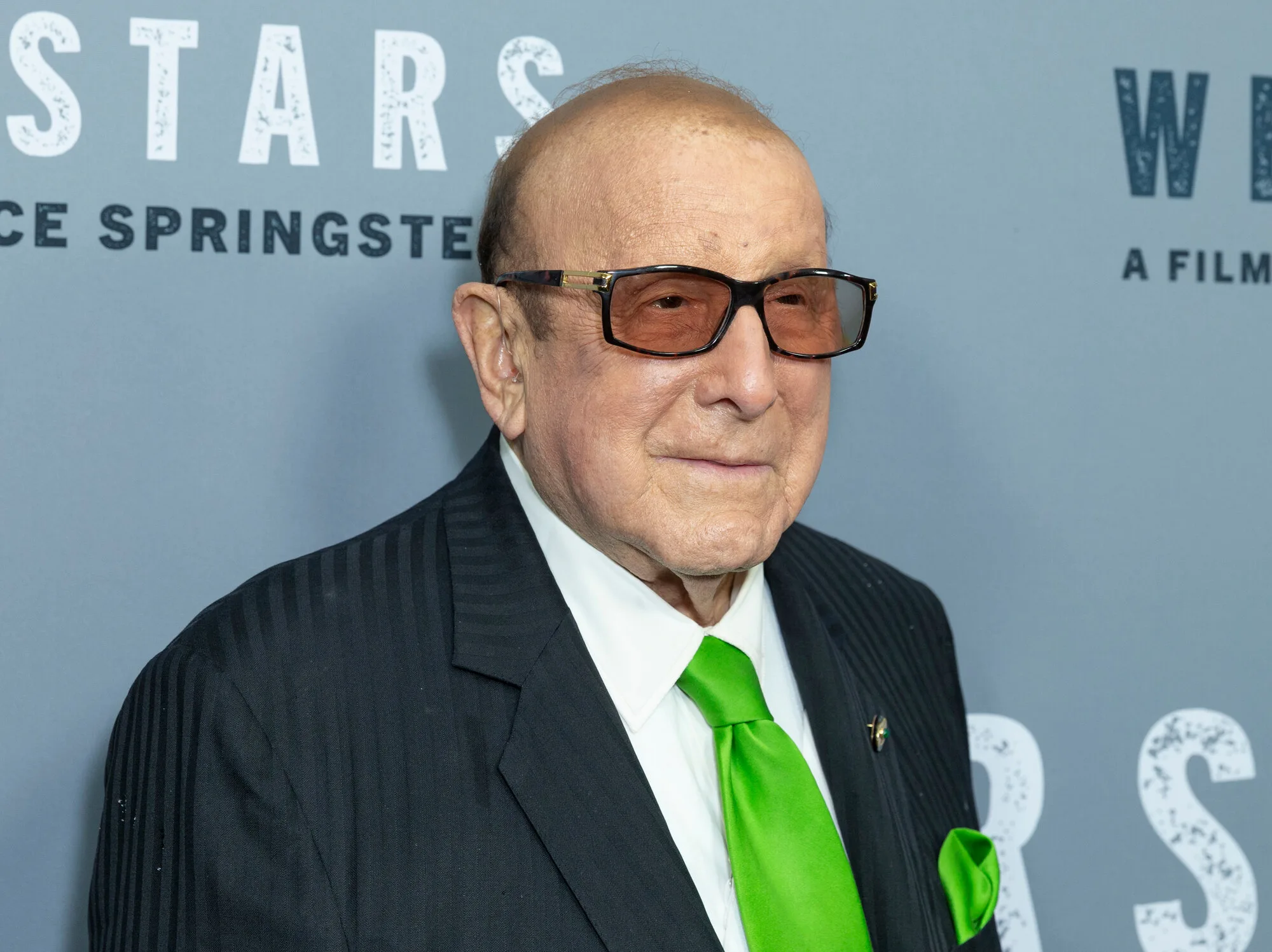
Clive Davis died Monday at his home in Manhattan. He was 94 years old. His family confirmed the death in a statement that reached for the right words and found them:
"To the world, our father was the iconic music legend whose vision, instincts, and relentless pursuit of excellence shaped the soundtrack of countless lives. He discovered, mentored, and championed the greatest artists in modern music history, leaving an indelible mark on culture that will endure for generations."
He had been hospitalized in May with respiratory problems. The cause of death was not officially disclosed. He was 94 years old and he had been in music for 60 of them, running labels, signing artists, hosting parties, making stars out of people who would have otherwise remained talented and unknown.
His nickname was "the man with the golden ears." It was accurate. The ear that identified Janis Joplin at the Monterey Pop Festival in 1967, the first time Davis had ever heard her, the year he became president of Columbia Records, was the same ear that identified Whitney Houston performing in a New York nightclub in 1983, the same ear that heard something in a 22-year-old Bruce Springsteen that was worth betting the label's resources on, the same ear that recognized an 18-year-old Alicia Keys in 1999 and signed her to J Records, where her debut album Songs in A Minor sold 10 million copies and won five Grammys. The ear never stopped working.
The Brooklyn Kid Who Became King of the Record Business
Davis was born on April 4, 1932 in Brooklyn, New York, to a family that would not be there for most of his adult life. Both of his parents died when he was a teenager.
He attended New York University on a full scholarship, graduated magna cum laude and then received a full scholarship to Harvard Law School, graduating in 1956. He became a lawyer. He had no particular relationship with music.
In 1960, after two frustrating years at a prominent New York law firm, he was hired as assistant counsel at Columbia Records, which was then owned by CBS.
He would later say he was thrust into music without realizing he had an ear for it, "never knowing I had a natural gift for music that would become the passion of my life," as he told CNN in 2013. Within five years he was the label's top lawyer. By 1967 he was its president.
The presidency at Columbia began with a decision that changed the company and arguably the record business. Davis moved staid, conservative Columbia aggressively into the rock and roll market, a genre the label had largely ignored.
His first major signing was Joplin, whom he spotted at Monterey in 1967 and signed immediately. Santana followed. Then Springsteen. Then Aerosmith, signed after Davis saw them at Max's Kansas City in New York City.
Then Chicago. Then Billy Joel. Then Earth, Wind & Fire. By 1973, Davis had transformed Columbia from a label known for classical and middle-of-the-road pop into the home of the most important rock acts in America.
Then he was fired. The allegations were serious, misuse of corporate funds, involvement in a payola scandal. The truth was more nuanced. Davis pleaded guilty in 1975 to a single count of tax evasion and was fined $10,000. All other charges were dropped.
He settled a civil suit with CBS in 1977. He always maintained that the campaign against him was motivated by institutional forces that resented what he had done to Columbia. "This virtually complete exoneration received nothing like the coverage of all the baseless charges, rumors, and guilt-by-association whispers that I had lived with since leaving Columbia," he wrote.
Act Two: Arista And Whitney
Davis was not down for long. In 1974, he was offered the chance to combine several failing Columbia Pictures record imprints into a new entity.
The result was Arista Records, which Davis ran for 26 years and which became the second act of a career that refused to have only one.
At Arista, Davis signed Barry Manilow, who had been turned down by every other label.
He signed Patti Smith. He signed or developed the careers of artists across every genre the label touched, and then, in 1983, he heard a teenage girl named Whitney Houston singing in a New York nightclub where her mother Cissy was performing.
Davis signed her to Arista. What followed is among the most successful and most tragic stories in the history of American music.
Houston became one of the bestselling artists in the history of the record business, number one albums, number one singles, Grammys, films, a cultural footprint that stretched across two decades.
Davis was her closest professional champion and, by his own account, one of the people who believed most stubbornly in her ability to overcome the drug addiction that eventually consumed her.
On February 11, 2012, Houston was found dead in a hotel bathtub at the Beverly Hilton, just hours before she was to appear at Davis's annual Pre-Grammy Gala in the same building. She was 48 years old.
"Maybe I should have been more skeptical," Davis wrote in his 2013 memoir, The Soundtrack of My Life. "But I've always been optimistic, and I felt hopeful. It felt like old times."
Arista under Davis also expanded into country, Alan Jackson, Brooks & Dunn, Brad Paisley. In 1989 he partnered with L.A. Reid and Babyface to create LaFace Records, which became the home of TLC, Usher, OutKast, Toni Braxton and Pink.
In 1994 he co-founded Bad Boy Records with Sean Combs, which launched The Notorious B.I.G. and became the defining label of 1990s hip-hop, even as Davis admitted he never quite understood rap music.
Act Three: J Records And Alicia Keys
In 2000, at 68 years old, Davis founded J Records and signed Alicia Keys, a teenager he had identified as a generational talent.
Her debut album Songs in A Minor sold more than 10 million copies, won five Grammys and established her as one of the major artists of her generation.
Davis also signed Lana Del Rey, helped develop Kelly Clarkson and continued working and discovering and championing artists until the end.
The annual Pre-Grammy Gala, which Davis hosted at the Beverly Hilton every year for decades, became one of the most prestigious and closely watched nights in the music industry.
The most recent one, on January 31, 2026, included appearances from Jelly Roll, Dave Grohl, Pharrell Williams, Gladys Knight, Lana Del Rey, Shaboozey and dozens more. A video message from Barack Obama noted that "Clive's talent has always been seeing and hearing what other people don't."
He was inducted into the Rock and Roll Hall of Fame in 2000 in the non-performer category, one of the few executives ever so honored. He founded the Clive Davis Institute of Recorded Music at NYU in 2003. He came out publicly as bisexual in his 2013 memoir, saying he hoped it would lead to "greater understanding" of bisexuality.
He had been living with a male partner in his later years. He had four children and eight grandchildren.
Bruce Springsteen posted his tribute Monday. "At 22 years old, he changed my life when he signed me to Columbia Records," Springsteen wrote. "He treated me with the same respect and kindness as a 22-year-old nobody as he did after all my success. He was a great record man and close friend."
He was 94 years old. He died at home in Manhattan. The ear that found Janis Joplin at Monterey in 1967 never stopped working.