Trump Announces A Security Deal With Denmark That Gives The US Permanent Control Over Greenland's Security
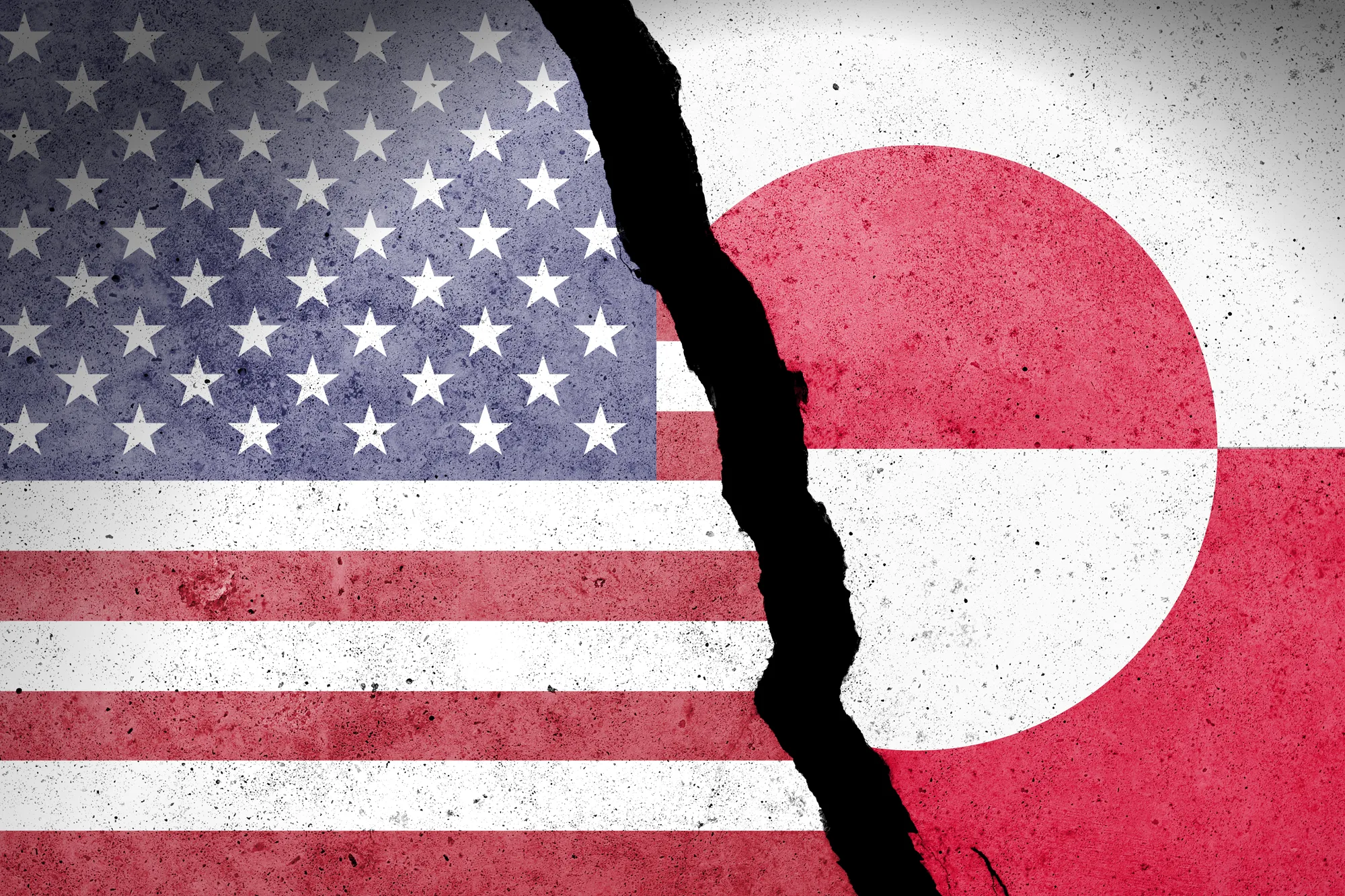
President Donald Trump announced Friday evening on Truth Social that the United States has reached a security agreement with Denmark and Greenland, one that he described as giving America "permanent control over security, and all other needs" in the Arctic territory, without the United States actually purchasing or annexing it.
The formal signing is expected at the United Nations General Assembly in New York in the coming days.
"I am pleased to announce that the United States of America has entered into an Agreement with The Kingdom of Denmark, and Greenland, that gives the United States permanent control over security, and all other needs, in Greenland, completely addressing ALL of our many U.S. concerns," Trump wrote. "There will be NO COST to the United States."
He added that no adversary of the United States, Russia, China or otherwise, would ever again be permitted to have a military presence in Greenland or make sensitive investments there "without our express written approval."
He said America would "immediately begin the process of developing a large Military presence" in the appropriate parts of the island.
Danish Prime Minister Mette Frederiksen responded with a joint statement alongside Greenland's leadership confirming that the three governments expect to sign the agreement next week.
Her statement described the deal as one that "recognizes the sovereignty and territorial integrity of the Kingdom and the Greenlandic people's right to self-determination." The full text of the agreement has not been released.
How Did The U.S. Get Here?
The Greenland dispute is one of the strangest geopolitical dramas of the Trump era, a confrontation between allies, a protracted standoff, a series of escalations that at various points threatened to fracture NATO and the Western order, and now, apparently, a negotiated outcome that both sides are calling a victory.
Trump first raised the possibility of acquiring Greenland during his first term in 2019, when it was widely treated as a joke. It was not a joke.
He returned to the idea with full force in January 2026, making it a central early demand of his second administration, insisting that the United States needed Greenland for national security reasons, citing Russian and Chinese ambitions in the Arctic, and at various moments threatening military action if Denmark refused to cooperate.
Denmark's response was firm. Frederiksen said Greenland was not for sale. She visited the island. King Frederik X traveled to Nuuk in February in a visible demonstration of Danish commitment to its territory.
Denmark announced it would deploy a substantial number of additional troops to Greenland. France and Canada opened new consulates in Nuuk. The European Union issued a formal rebuke of Trump's position. Thousands of protesters rallied in Copenhagen and Nuuk under the banner "Hands Off Greenland."
Trump did not back down from the pressure, but he did, over the following months, shift his approach from demanding purchase or annexation toward demanding security guarantees. The gap between the two positions was significant, and it is the space in which today's agreement was apparently negotiated.
What Does Trump's Deal Accomplish?
The specific terms of the agreement have not been publicly released, which means the wide gap between how Trump described it and how Danish and Greenlandic officials described it may not close until the full text is available.
Trump's framing, "permanent control over security, and all other needs," sounds expansive to the point of absorption. His critics on Friday suggested he was describing a treaty that effectively makes Greenland a protectorate of the United States in everything but name.
His supporters argued he achieved exactly what he said he would achieve without spending a dollar.
Frederiksen's framing was considerably more limited. Her statement used the language of sovereignty and self-determination, two principles that are fundamentally incompatible with the kind of permanent control Trump described.
A State Department official told reporters Friday that the United States still believes the best long-term solution for Greenland's security needs involves American acquisition, suggesting Washington has not actually given up on that goal, but has agreed to a security arrangement in the interim.
What the agreement is built on: the 1951 Defense of Greenland Agreement between the United States and Denmark already gives the US military sweeping rights in Greenland, including the authority to construct, install, maintain and operate facilities and equipment, and to station and house personnel.
The Pituffik Space Base, formerly Thule Air Base, operates under that agreement and is the United States' northernmost military installation. Whatever new agreement was signed this week builds on that foundation.
It appears to significantly expand US military activity rights, add new economic investment restrictions targeting Russia and China, and formalize a consultation mechanism over Greenlandic security decisions.
What Has Greenland Said?
Greenland held a parliamentary election on March 24, 2026, called early in direct response to the US pressure, and the Inuit Ataqatigiit party led by Prime Minister Mute Egede won a historic majority, giving a landslide mandate to a party whose platform centered on Greenlandic independence from Denmark.
The election produced a surprising outcome: a territory now moving toward eventual independence from Denmark, whose population has been deeply opposed to American annexation, voting overwhelmingly for a party that has been more open to constructive engagement with the United States on economic development.
Egede has said repeatedly that Greenland's path to independence runs through economic self-sufficiency, through developing its rare earth minerals, its fisheries and its energy resources, and that American investment and security partnerships could be part of that path without surrendering sovereignty. That pragmatic opening is likely what made the agreement possible.
Greenland has a population of approximately 56,000 people. It is the world's largest island by landmass. Its strategic location between North America and Europe at the top of the Atlantic made it the site of American air bases in World War II and throughout the Cold War.
As Arctic ice recedes and opens new shipping lanes, it is becoming more strategically valuable every year. China has made multiple attempts to invest in Greenland's rare earth deposits and airports. Russia has dramatically expanded its Arctic military presence.
The United States has argued for years that it needs more than it currently has in Greenland to protect its northern flank.
Where Do Things Go From Here?
The formal signing is expected on the sidelines of the United Nations General Assembly in New York, where world leaders have been gathering this week.
Frederiksen is expected to be present. Egede is expected to be present. The full text of the agreement will presumably be released at that point.
NATO issued a welcoming statement Friday, saying it "welcomes the announcement that an agreement will soon be signed by the United States, Denmark, and Greenland" and calling it a positive step for Arctic security. European leaders who had spent months rallying behind Denmark were notably more guarded.
Whatever the text reveals, the political reality Friday is this: Trump announced a deal and called it a complete victory for American interests. Denmark said the deal protects its sovereignty and Greenland's self-determination.
Greenland's leadership said the agreement will be signed. They are all describing the same document in fundamentally different terms, which is either a sign of skillful diplomatic face-saving by all parties, or a sign that the ambiguities built into the agreement are large enough to drive future conflict through.
The text will settle it. Until then, Greenland remains a Danish territory, an American strategic priority, a Greenlandic aspiration for eventual independence, and the world's most discussed island.